Save 40% OFF Now!

Wabi Sabi Art

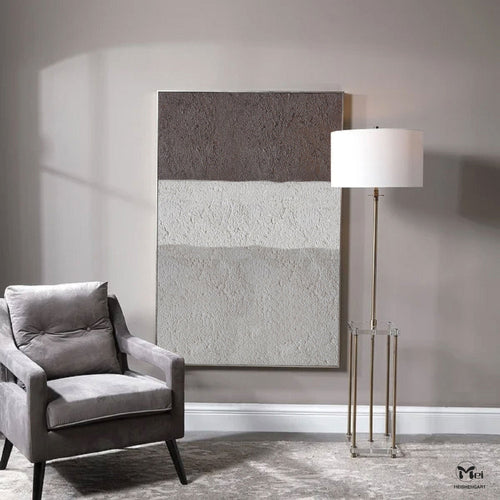
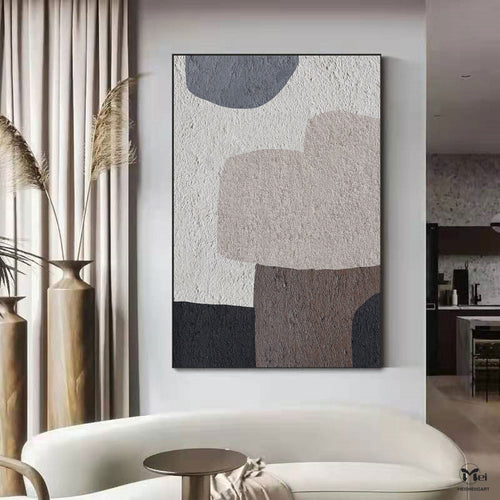
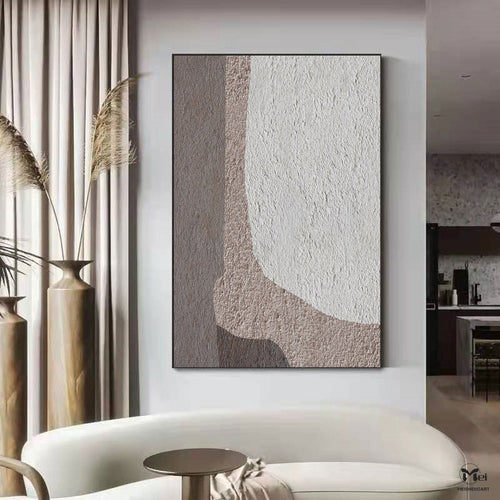
Choose wabi sabi art for imperfect, quiet walls—not for a polished beige print. These handmade extra-large canvases use earth, ash, and spare gold on built or cracked surfaces, sized as one calm field for sofas, bedrooms, and plaster rooms.

320 products
  • Oversized Abstract Canvas Wall Art Gray and White Acrylic Painting Gp043
    Regular price
    from $115.00
    Sale price
    from $115.00
    Regular price
    $300.00
    Unit price
    per 
  • Large Beige Abstract Landscape Painting Bright Brown Painting Ap012
    Regular price
    from $115.00
    Sale price
    from $115.00
    Regular price
    $300.00
    Unit price
    per 
  • Black And White Abstract Painting Large Contemporary Canvas Wall Art Ap021
    Regular price
    from $118.00
    Sale price
    from $118.00
    Regular price
    $300.00
    Unit price
    per 
  • Black And White Minimalist Canvas Art Grey Abstract Painting Ap024
    Regular price
    from $118.00
    Sale price
    from $118.00
    Regular price
    $300.00
    Unit price
    per 
  • Gray Beige Brown Texture Painting Abstract Canvas Art Minimalist Art Ap110
    Regular price
    from $118.00
    Sale price
    from $118.00
    Regular price
    $300.00
    Unit price
    per 
  • Beige Gray Minimalist Abstract Painting Living Room Nordic Painting Ap111
    Regular price
    from $118.00
    Sale price
    from $118.00
    Regular price
    $300.00
    Unit price
    per 
  • Beige And Gray Abstract Painting Geometric Art Ap126
    Regular price
    from $118.00
    Sale price
    from $118.00
    Regular price
    $300.00
    Unit price
    per 
  • Large Abstract White Painting Heavy Textured Painting For Living Room Kp008
    Regular price
    from $118.00
    Sale price
    from $118.00
    Regular price
    $300.00
    Unit price
    per 
  • Black Blue Gray Abstract Painting on Canvas Contemporary Art Op090
    Regular price
    from $118.00
    Sale price
    from $118.00
    Regular price
    $300.00
    Unit price
    per 
  • Silver Blue Gray Abstract Painting Extra Large Abstract Art Geometric Wall Art Yp019
    Regular price
    from $118.00
    Sale price
    from $118.00
    Regular price
    $300.00
    Unit price
    per 
  • Black and White Abstract Painting Large Contemporary Paintings Yp031
    Regular price
    from $118.00
    Sale price
    from $118.00
    Regular price
    $300.00
    Unit price
    per 
  • Black And White Gtay Abstract Painting Acrylic Large Original Abstract Art Yp062
    Regular price
    from $118.00
    Sale price
    from $118.00
    Regular price
    $300.00
    Unit price
    per 
  • Black and White Landscape Painting Minimalist Modern Artwork Fp006
    Regular price
    from $118.00
    Sale price
    from $118.00
    Regular price
    $300.00
    Unit price
    per 
  • Green Minimalist Painting Dinning Room Wall Art Decor Qp043
    Regular price
    from $118.00
    Sale price
    from $118.00
    Regular price
    $300.00
    Unit price
    per 
  • White Green Brown Black Art Living Room Handmade Painting Qp048
    Regular price
    from $118.00
    Sale price
    from $118.00
    Regular price
    $300.00
    Unit price
    per 
  • Beige and White Painting Beige Abstract Painting Beige Wall Decor Qp055
    Regular price
    from $118.00
    Sale price
    from $118.00
    Regular price
    $300.00
    Unit price
    per 

Wabi Sabi Art: How to Choose Imperfect, Quiet Canvas for the Home

Wabi Sabi Art on a shopping site is usually a neutral, textured abstract: beige, gray, bone, soot, a little gold, cracked plaster, uneven fields. That look can be beautiful. It is not the whole meaning of the word. Wabi-sabi is a Japanese aesthetic of beauty that is imperfect, impermanent, and incomplete—austere rather than polished, rustic rather than new. Wabi points to restrained, humble beauty; sabi to the patina that time leaves. If you buy from this collection, use those ideas as a filter, not as a sticker on any gray painting.

The canvases here are handmade oil or acrylic, often extra-large, with cracked or built surfaces and limited palettes. They are painted to order and shipped rolled. The buying job is to find work whose roughness feels considered—not distress added as a trend.

What wabi-sabi is asking of a wall

The Met’s essay on the Japanese tea ceremony explains how sixteenth-century tea masters such as Sen no Rikyū turned toward rustic Korean and Japanese vessels and found value in unrefined, irregular, apparently artless form. That wabi taste is not “unfinished because we ran out of time.” It is a choice to stop before the object becomes sleek. A tea bowl can be slightly warped and still be the most serious object in the room. A canvas can work the same way if the irregularity is in the material: an uneven scrape, a hairline crack that happened in the paste, a field that is not perfectly centered.

Seasonal imagery in Japanese art, also at the Met, is another useful check. Japanese painters long treated change—blossom, haze, geese, snow—as a way to speak about time passing. Wabi-sabi wall art does not need cherry trees. It does need to look as if light and use could mark it: matte rather than showroom gloss, earth rather than neon, a surface that will read differently at 4 p.m. than at noon.

What does not belong under this heading: high-chroma drip “chaos,” hard optical geometry with no breath, or a perfectly smooth beige print labeled wabi-sabi because the color is neutral. Quiet color without honest surface is just beige.

How to choose a canvas that earns the name

Start with materials, not a mood board. Look for handmade relief—modeling paste, scraped plaster, dry-brush over a built ground, a crackle that is in the paint rather than printed on. Side-on photos should show height. If every image is straight-on and shadowless, you may be looking at a flat graphic.

Keep the palette low. Bone, clay, ash, warm gray, olive-brown, and a spare thread of gold or ink-black are enough. Gold should feel like a repair or a worn edge, not like a second chandelier. If the listing needs six accent colors to look “interesting,” it is probably not this aesthetic.

Prefer asymmetry and leftover space. A perfectly centered motif on a glossy field fights the idea. A field that thins toward one edge, or a dark bar that sits slightly off-center, is closer to the tea-bowl logic: nothing is forced into symmetry.

Size it to the architecture, then stop. Extra-large works if the wall is large. Wabi-sabi is not automatically small and modest. A big, quiet canvas can be more humble than a cluster of busy little frames. Above a sofa or bench, two-thirds to three-quarters of the furniture width still applies. Leave 6 to 12 inches above the back so the painting stays attached to the room, not floating toward the cornice.

Match the room’s temperature. Oak, linen, plaster, stone, and raw wood already speak this language. High-gloss lacquer, chrome, and sharp downlights will flatten the surface you paid for. Raking daylight or a warm, off-axis lamp will show the cracks.

Wabi-sabi is not the same as minimalism

Minimalism often wants even planes and industrial finish. Wabi-sabi wants evidence of making and of time. A black-and-white grid can sit in this collection if the paint is uneven and the whites are not optical-bright. An industrial loft can take a cracked gray field if the loft is not already shouting. The test is whether the wall feels calmer after the canvas is up, not whether it looks more expensive.

Do not confuse kintsugi—the repair of broken pottery with visible gold—with a gold stripe added for luxury. One records a break. The other is decoration. If the gold sits on top like trim, treat it as contemporary accent art and judge it on those terms.

A short buying order

  1. Ask whether the surface is actually built or only photographed as “texture.”
  2. Limit color to earth, ash, and one quiet accent.
  3. Accept irregularity that looks made, not damaged in shipping.
  4. Size extra-large only when the wall needs a field, not a stamp.
  5. Hang for living height and side light.

Used this way, wabi sabi art is a standard for restraint. The painting should look as if it could stay on the wall while the rest of the house changes around it.

Is wabi-sabi art the same as beige minimalist art?

No. Minimalism can be perfectly smooth. Wabi-sabi needs visible irregularity—uneven paint, crackle, or a surface that shows how it was made.

What colors belong in wabi sabi art?

Clay, bone, ash, warm gray, olive-brown, and spare ink or gold. Bright primaries usually pull the work out of the aesthetic.

Does cracked texture mean the painting is damaged?

Not if the crackle is part of the ground and stable. Ask for angled photos. Shipping cracks across the image are a different problem.

Can wabi sabi art work in a modern loft?

Yes, if the loft has raw materials—concrete, timber, linen—and the canvas stays matte and quiet. It will fight a high-gloss, high-chroma scheme.

How large should wabi sabi wall art be?

Large enough to finish the wall as one field. Above seating, use about two-thirds to three-quarters of the furniture width; do not default to a small “humble” print on a long wall.

Is gold leaf compatible with wabi-sabi?

Only when it reads as a worn or repaired edge. A large metallic block usually belongs with contemporary luxury art, not with this taste.