Save 40% OFF Now!

Jackson Pollock Painting: Extra Large Drip and Action-Style Abstracts

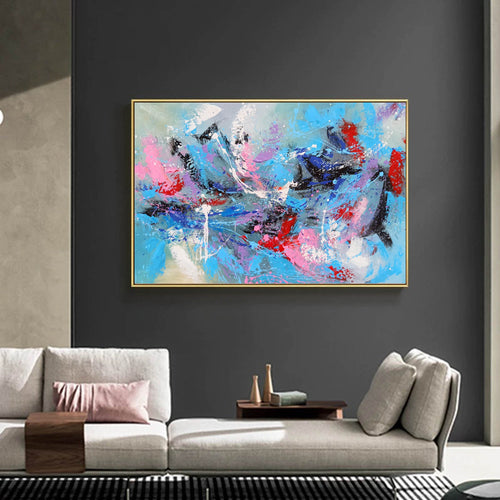
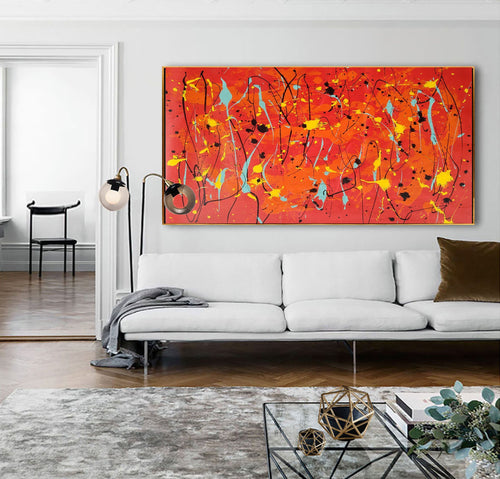
Choose Jackson Pollock painting as handmade drip-style abstraction—not a museum original. These extra-large oil and acrylic canvases use poured lines, layered splatters, and all-over fields sized for sofa walls, in palettes from blue-white to gold-and-graphite.

58 products
  • Colorful Drip - Style Abstract Art – Ideal for Modern Art Gallery & Creative Studio Loft LargeART0704
    Regular price
    from $219.00
    Sale price
    from $219.00
    Regular price
    $395.00
    Unit price
    per 
  • Large - Scale Gray - Scale Drip Art for Industrial Loft & Black - Tie Event Space LargeART0478
    Regular price
    from $219.00
    Sale price
    from $219.00
    Regular price
    $395.00
    Unit price
    per 
  • Hand - painted White Background Drip Painting Acrylic Art for Modern Art Galleries LargeART1728
    Regular price
    from $219.00
    Sale price
    from $219.00
    Regular price
    $395.00
    Unit price
    per 
  • Hand - painted Colorful Drip Tree Acrylic Art for Whimsical Children’s Playrooms LargeART1727
    Regular price
    from $219.00
    Sale price
    from $219.00
    Regular price
    $395.00
    Unit price
    per 
  • Hand - painted Red Background Drip Painting Acrylic Art for Energetic Gym Interiors LargeART1725
    Regular price
    from $219.00
    Sale price
    from $219.00
    Regular price
    $395.00
    Unit price
    per 
  • Red Blue Black Painting Original Jackson Pollock style Wp048
    Regular price
    from $118.00
    Sale price
    from $118.00
    Regular price
    $300.00
    Unit price
    per 
  • Jackson Pollock Style Red Abstract Painting Living Room Art Wp047
    Regular price
    from $118.00
    Sale price
    from $118.00
    Regular price
    $300.00
    Unit price
    per 
  • “Blue and White Drip Abstract on Beige” - Action - Painting - Style Art on Canvas DKH1580
    Regular price
    from $219.00
    Sale price
    from $219.00
    Regular price
    $395.00
    Unit price
    per 
  • “Blue and White Drip Abstract” - Action - Painting - Style Art on Canvas DKH1560
    Regular price
    from $219.00
    Sale price
    from $219.00
    Regular price
    $395.00
    Unit price
    per 
  • “Blue Dripping Abstract” - Expressive Abstract Art on Canvas DKH1537
    Regular price
    from $219.00
    Sale price
    from $219.00
    Regular price
    $395.00
    Unit price
    per 
  • “Dripping Colorful Abstraction” - Multicolor Abstract Art on Canvas DKH1199
    Regular price
    from $219.00
    Sale price
    from $219.00
    Regular price
    $395.00
    Unit price
    per 
  • Black & Gold Dripped Abstract - Perfect for Luxury Bedroom & Art Gallery Corner LargeART2358
    Regular price
    from $219.00
    Sale price
    from $219.00
    Regular price
    $395.00
    Unit price
    per 
  • Reimagined Pollock - Style Vivid Chaos Abstract Painting - For Teen’s Room & Art Gallery Nook LargeART2347
    Regular price
    from $219.00
    Sale price
    from $219.00
    Regular price
    $395.00
    Unit price
    per 
  • Purple Drip Abstract Canvas Painting, Great for Eclectic Living Room & Creative Boutique LargeART1321
    Regular price
    from $219.00
    Sale price
    from $219.00
    Regular price
    $395.00
    Unit price
    per 
  • Colorful Drip Abstract Canvas Painting, Suited for Creative Studio & Vibrant Café LargeART1316
    Regular price
    from $219.00
    Sale price
    from $219.00
    Regular price
    $395.00
    Unit price
    per 
  • Blue - Gray Abstract Drip Abstract Canvas Painting, Ideal for Coastal Home Office & Serene Bedroom LargeART1138
    Regular price
    from $219.00
    Sale price
    from $219.00
    Regular price
    $395.00
    Unit price
    per 

Jackson Pollock Painting: How to Choose Drip-Style Abstract Art for the Wall

A Jackson Pollock Painting in a home collection is almost never a museum original. It is handmade work in the language Pollock made famous: poured and dripped color, an all-over field, and a surface that records movement. That distinction matters. Jackson Pollock (1912–1956) was a leading Abstract Expressionist. His drip paintings belong to museums and estates. What you can hang above a sofa is a contemporary canvas painted in oil or acrylic that borrows the energy of that method—fluid lines, layered splatters, dense webs of color—without pretending to be Number 1A, 1948.

This collection at Extra Large Wall Art is built that way: action-painting-style abstracts, dripping textures, extra-large formats, colors from blue-and-white fields to gold-and-graphite webs. The buying question is not “Which Pollock is this?” It is whether a drip field is the right object for your wall.

What the style actually is

By 1947 Pollock had laid unstretched canvas on the floor and flung, poured, and trailed thinned paint so that line and color could stand without a pictured subject. MoMA describes those works as less a picture than a record of paint’s fluid behavior. Tate groups him with the action painters: artists for whom the physical act—splashing, gestural strokes, dripping—was part of the finished image. Harold Rosenberg named the idea in 1952; the canvas became an event as much as a picture.

For a living room, take three practical lessons from that history.

First, scale is not optional. Pollock’s best-known drips are wall-size. A small printed “Pollock” on a long sofa wall looks like a sample. Extra-large handmade work is closer to the original ambition: a field you stand in front of, not a souvenir.

Second, the composition is usually all-over. There is no single focal object. That is why drip art can finish a large wall without adding a landscape or a portrait to dinner conversation. It is also why a timid, empty drip with one thin scribble fails. The web has to reach the edges.

Third, the surface should look poured, not Photoshopped. Handmade acrylic or oil leaves ridges, pools, and crossings that change in side light. A flat print of drips is only a photograph of action.

How to choose a drip canvas for a real room

Measure the furniture first. Above a sofa or sideboard, aim for about two-thirds to three-quarters of the furniture width. Drip fields read as atmosphere; if they are too narrow they look like a fragment cut from a larger painting.

Match density to the room. A crowded, high-chroma web (reds, blues, blacks crossing at full speed) needs a quiet wall and simple furniture. A blue-and-white or beige-and-graphite drip can sit in a calmer Japandi or coastal room. Gold or metallic threads behave like jewelry: useful in a spare interior, noisy next to brass lamps and a busy rug.

Decide how much chaos you can live with. Some listings in this collection stay close to classic enamel webs. Others drift toward pastel cascades or landscape-like drips. The closer the work stays to an all-over field, the more it will feel like action painting. The more it resolves into a horizon or a figure, the more it becomes decorative abstraction that only nods at Pollock.

Watch the light. Drip texture wants raking light. Overhead cans aimed straight at glossy enamel can turn the surface into glare. A satin or mixed sheen is easier under a single living-room fixture.

Hang it as one decision. One extra-large drip canvas is stronger than a grid of small “Pollock-style” prints. Leave about 6 to 12 inches above a sofa back. On an empty wall, keep the center near standing eye level. Do not raise the painting toward the ceiling because drip art “feels museum-like.” Museum hangs still meet the body.

Color, rooms, and what not to copy

Blue-white and gray-black drips travel well in mixed daylight. Soft pink-teal fields suit bedrooms and pale living rooms if the marks stay airy. Multi-color “symphonies” need space and a neutral sofa; they will fight patterned textiles.

Do not try to reproduce a specific museum painting. One: Number 31, 1950 and Autumn Rhythm are copyrighted works with their own scale, materials, and history. A home canvas should be an original drip composition in that tradition—handmade, sized to your wall, approved as its own object.

Abstract expressionism, in Tate’s terms, is the American mid-century field that includes Pollock’s gesture and Rothko’s quieter color. If your room already has a calm color-field piece, a dense drip on the opposite wall can be too much event. Choose one dominant abstract language per sightline.

A short buying order

  1. Confirm you want an all-over drip field, not a landscape with a few splatters.
  2. Size extra-large to the sofa or the clear wall.
  3. Pick density and chroma to match how quiet the furniture is.
  4. Insist on handmade paint, not a printed web.
  5. Light from the side so the crossings stay visible.

Used that way, Jackson Pollock painting as a category is a guide to energy and scale—not a claim that the museum came home.

Are these original Jackson Pollock paintings?

No. Original Pollocks belong to museums and private collections. This category is handmade contemporary work in a drip and action-painting style.

What is drip painting?

It is a method of pouring, flinging, or trailing liquid paint onto canvas, often laid flat, so the marks record movement instead of describing an object.

How large should a Pollock-style canvas be above a sofa?

Use about two-thirds to three-quarters of the sofa width. Drip fields need enough span for the web to read as a complete surface.

Will a busy drip painting overwhelm a small living room?

It can. High-chroma, high-density webs want a quieter room. In a compact space, choose a more open field in blue, white, beige, or graphite.

Is palette-knife texture the same as Pollock’s drip technique?

Not exactly. A knife builds ridges by spreading paste. Drip work lays linear, poured tracks. Some contemporary canvases combine both; look at close-ups before you buy.

Can drip art hang in a bedroom or hallway?

Yes, if the palette is calmer and the passage is wide enough. A dense multi-color web is usually better on a main living wall than in a narrow hall.