
The Timeless Elegance of Gold Abstract Painting: Where Ancient Luster Meets Modern Expression
In the ever-evolving world of contemporary art, few genres capture the imagination quite like Gold Abstract Painting. This captivating style fuses the radiant history of gold as a material with the boundless freedom of abstraction, creating works that shimmer with depth, emotion, and luxury. Whether it's the subtle gleam of gold leaf against swirling acrylics or bold metallic accents that evoke cosmic energy, these paintings transform walls into dynamic statements of sophistication.
Gold has long symbolized divinity, wealth, and light in art history. From the gilded backgrounds of Byzantine icons to the opulent surfaces of Renaissance altarpieces, it has illuminated sacred narratives and elevated ordinary objects to the extraordinary. Yet in Gold Abstract Painting, this legacy is reinvented. Artists strip away figurative constraints, allowing gold to dance freely across canvases in fluid forms, textured layers, and ethereal patterns. The result? Timeless pieces that feel both ancient and cutting-edge, perfect for modern interiors seeking warmth and elegance.
Explore the finest Gold Abstract Painting collections today and discover hand-painted originals that bring this magic home: Gold Abstract Painting.
A Radiant Journey Through History
The story of gold in art stretches back millennia, providing fertile ground for today's abstract innovators. Ancient Egyptians mastered gold leaf around the fifth millennium BC, hammering the soft metal into sheets thinner than a human hair to adorn jewelry, amulets, and ritual objects. Its non-tarnishing luster made it a symbol of eternity and divine power.
By the Byzantine era (5th century onward), gold dominated religious panel paintings. Entire backgrounds were gilded to represent heavenly light, glowing ethereally under candlelight. This technique influenced early Renaissance masters, who layered gold leaf over bole—a red clay base—for added warmth and depth. Examples like Donato de’ Bardi’s Madonna and Child with Saints Philip and Agnes (c. 1425–30) showcase overlapping sheets and subtle wear that reveal the craftsmanship beneath.
Medieval illuminated manuscripts further refined the craft with shell gold—powdered gold leaf mixed with binders like gum arabic, applied in delicate details. Ottoman and Persian artists created intricate golden motifs in albums and Qurans, blending calligraphy with luminous accents.
As European painting embraced oil and realism in the early modern period, gold receded from fine art, relegated to frames and craft. Yet the 19th and 20th centuries saw a revival. Gustav Klimt’s decorative portraits, such as The Kiss and Portrait of Adele Bloch-Bauer I, reintroduced gold for opulence and flattened planes, inspiring later abstraction.
In the mid-20th century, abstract pioneers fully embraced gold. Robert Rauschenberg’s Gold Paintings (1953–ca. 1960) applied gold leaf over newsprint and wood textures, creating tactile, reflective surfaces that blurred painting and sculpture. Yves Klein’s Monogolds series covered canvases entirely in gold leaf, turning them into sites of pure, meditative reflection echoing Byzantine icons.
These historical threads weave seamlessly into modern Gold Abstract Painting, where tradition fuels innovation rather than imitation.

Techniques That Sparkle: Crafting Gold Abstract Masterpieces
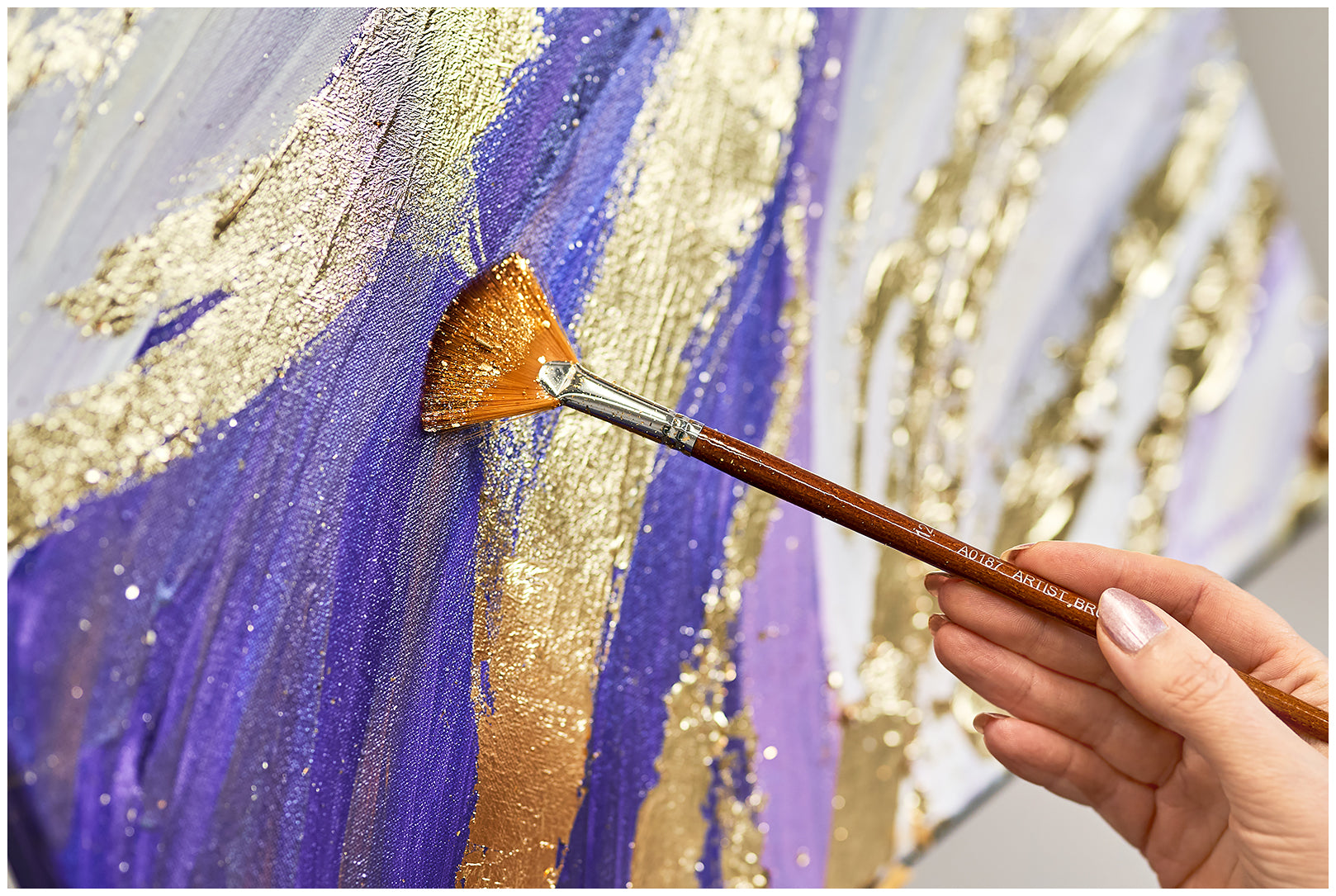
Creating a Gold Abstract Painting demands precision, patience, and creativity. The cornerstone is gold leaf techniques, a process refined over centuries but adapted for abstract freedom. Artists begin by preparing the canvas with gesso or a textured ground. They then apply gold size—an adhesive—before carefully laying ultra-thin gold leaf sheets (often 24-karat). Burnishing with agate tools creates mirror-like shines, while leaving some areas unburnished adds matte contrast and depth.
Mixed-media approaches expand possibilities. Contemporary creators layer gold leaf with acrylic pours, oil glazes, or impasto textures for dramatic effects. Some incorporate mica-based metallic paints for affordable shimmer without real gold’s cost. Others use kirikane—cutting gold foil into precise shapes and affixing them like mosaic tiles—for geometric abstraction.
Texture plays a starring role. Thick impasto strokes catch light differently than smooth metallic washes. Artists like those behind the Gold Abstract Painting collection often combine gold with deep blues, emerald greens, or neutral grays, evoking ocean depths, cosmic nebulae, or serene landscapes. Techniques such as alcohol ink diffusion or resin pours over gold create fluid, organic patterns that shift with viewing angles.
Modern innovations include synthetic alternatives like mica powders or gold-infused gels, allowing larger-scale works without the fragility of pure leaf. Yet many purists insist on traditional gilding for authenticity, as seen in the luminous examples from Extra Large Wall Art’s hand-painted series.
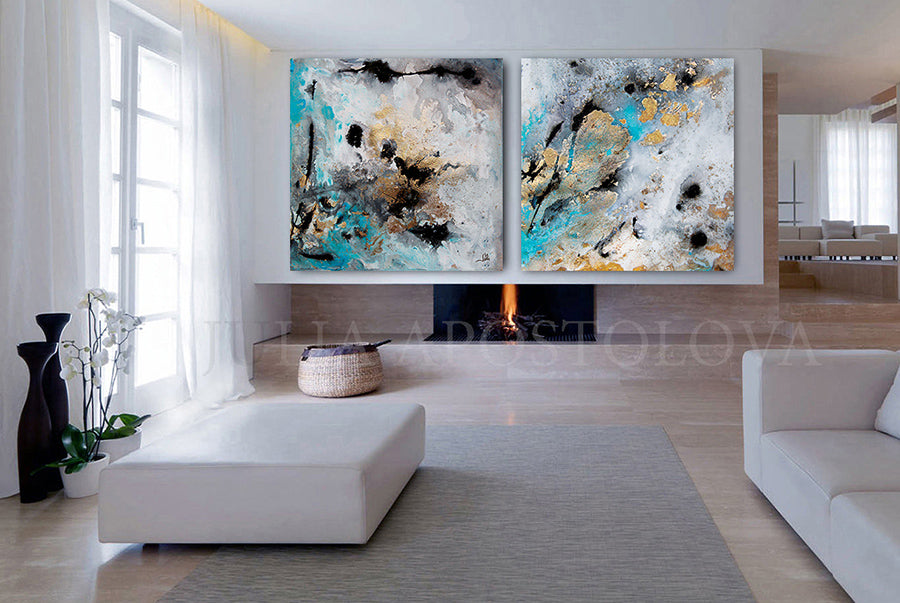
Symbolism and Emotional Resonance in Contemporary Gold Abstracts
Gold transcends mere decoration in abstract art. It embodies light itself—divine in historical contexts, now evoking energy, prosperity, and inner radiance. In Gold Abstract Painting, gold fragments can suggest hope amid chaos, like sunlight piercing storm clouds, or represent the interconnectedness of existence through flowing metallic veins.
For collectors, these works offer more than aesthetics. They infuse spaces with warmth and sophistication, ideal for Art Deco, loft, or Scandinavian interiors. The reflective quality makes rooms feel larger and more inviting, especially in low-light areas. Gold’s association with winners and status elevates any environment, turning living rooms into galleries of calm luxury.
Artists today draw from personal narratives: one might use gold to symbolize resilience after loss, another to celebrate cultural heritage. The abstraction invites viewer interpretation, making each piece a collaborative dialogue between creator and observer.
Discovering and Collecting Gold Abstract Paintings Today
The contemporary market for Gold Abstract Painting thrives with accessible originals and prints. Sites like Extra Large Wall Art specialize in hand-painted canvases starting at affordable prices, featuring oil and acrylic works in gold tones that suit modern homes. These pieces are designed for impact—large formats, durable finishes, and versatile styling.
When selecting, consider scale, lighting, and color harmony. A large triptych in navy and gold creates drama; smaller studies in soft neutrals offer subtlety. Care is straightforward: avoid direct sunlight to prevent fading, dust gently, and frame with UV-protective glass if needed. Many works use archival materials for longevity.
For deeper exploration of gold leaf techniques, revisit foundational resources like Jackson’s Art Blog’s comprehensive history.
Why Gold Abstract Painting Endures
This genre bridges past and present, offering visual poetry that resonates across cultures. Its versatility—from minimalist elegance to bold expression—ensures enduring appeal. As art democratizes through online collections, more enthusiasts can own a piece of this glowing legacy.
FAQ: Your Questions About Gold Abstract Painting Answered
1. What exactly is Gold Abstract Painting? It’s a contemporary art style where artists incorporate real gold leaf, metallic paints, or foil into non-representational compositions. Unlike traditional figurative gold works, these emphasize form, texture, color, and light interplay for emotional and aesthetic impact.
2. How does gold leaf differ from gold paint in abstract works? Gold leaf provides authentic, three-dimensional luster and texture that changes with light, while gold paint (often mica-based) offers smoother, more affordable coverage. Many artists combine both for layered effects.
3. Are these paintings suitable for modern home decor? Absolutely. Their warm glow complements minimalist, luxurious, or eclectic spaces. The Gold Abstract Painting collection features pieces tailored for living rooms, offices, and bedrooms.
4. How do I care for a gold abstract artwork? Keep away from direct sunlight and humidity. Dust with a soft cloth; professional cleaning for valuable pieces. Most contemporary works are sealed for durability.
5. Who are some notable artists in this style? Pioneers include Robert Rauschenberg and Yves Klein. Today, creators like Julia Apostolova, Annet Loginova, and Christine Bell produce stunning mixed-media gold abstracts.
6. Is gold abstract painting a good investment? Many originals appreciate due to unique craftsmanship and timeless appeal. Hand-painted pieces from reputable collections offer both beauty and potential value growth.
7. Can I find affordable options? Yes! From canvas prints to original oils starting under $200, platforms like Extra Large Wall Art make luxury accessible without compromising quality.