
A Long-Lost Picasso Etching Returns to Milwaukee After Eight Years
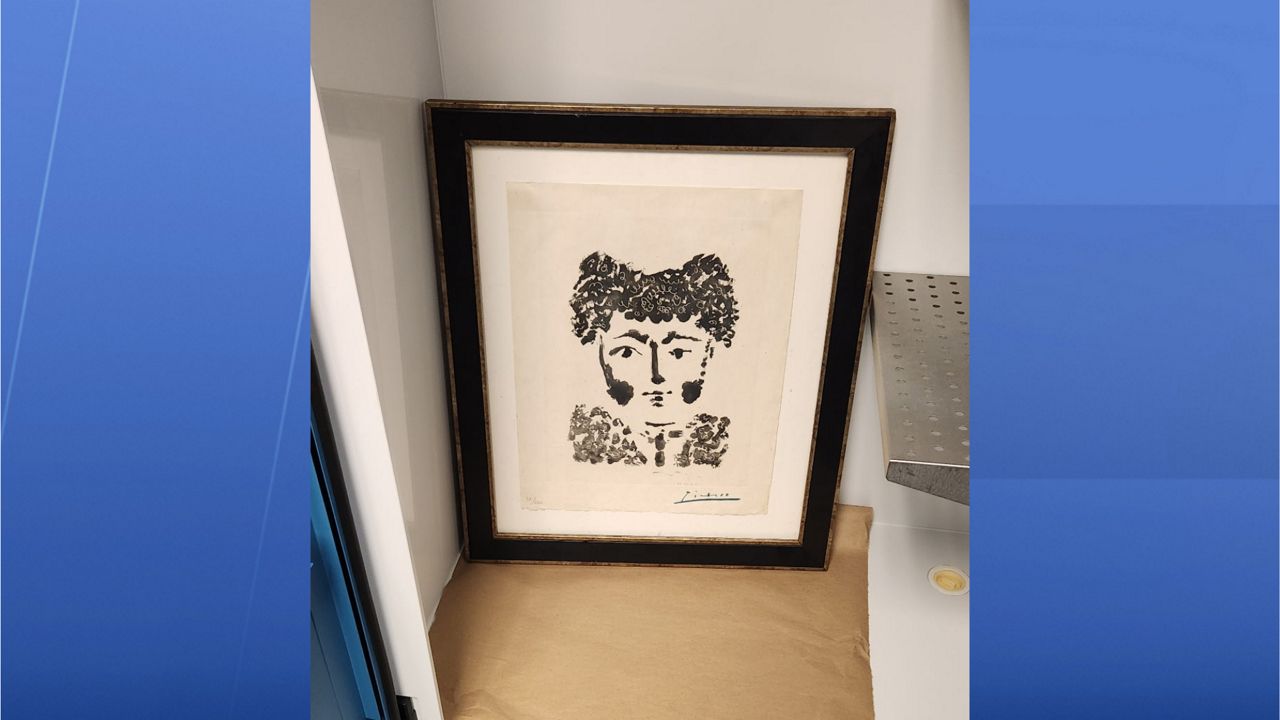
In early August 2026, a community member walked into a Milwaukee Police Department district station carrying a framed artwork that had been missing for more than eight years. The piece was quickly identified as an original Pablo Picasso etching and aquatint titled Torero (Bullfighter), created in 1949. Stolen from a downtown Milwaukee art appraisal business in 2018, the print had quietly hung on a wall in a private residence before being recognized and returned. Its recovery closed a quiet chapter in local art crime and offered a rare, almost cinematic resolution to a case that had long gone cold.
The work is one of a limited edition of thirty. Number nine in that series, it is printed in ink on paper and bears Picasso’s signature in green crayon in the lower right. At the time of the theft it was valued between $35,000 and $50,000. For Bill DeLind of DeLind Fine Art Appraisals, the firm from which it disappeared, seeing the print again felt almost unreal. “I never thought I’d see this again. And there it was,” he told local reporters after authenticating the piece. The gallery sticker was still attached, the glass intact, and the frame in good condition—evidence that whoever possessed it had simply hung it on a wall and left it there.
The 2018 Theft
On February 16, 2018, Torero vanished from the lobby of DeLind Fine Art Appraisals at 761 North Jefferson Street in Milwaukee’s East Town neighborhood. The business occupies space inside the historic George Watts Building. According to DeLind, the print was present when he arrived that morning. By early afternoon it was gone. No one noticed any suspicious activity, and the office lacked security cameras that might have captured the theft. DeLind later described the incident simply: the work “just walked off the wall.”
The print had been on consignment, displayed in a location visible to visitors and, reportedly, from outside. Investigators and the gallery considered both opportunistic theft and the possibility that the Picasso name itself had made the piece a deliberate target. A more valuable Renoir was also on view nearby but was left untouched. After the disappearance, the gallery registered the etching with international stolen-art databases in London and New York. A reward—reports vary between $5,000 and $10,000—was offered for information leading to its recovery, but the offer eventually expired.
Picasso’s Torero belongs to a broader body of work the artist produced around bullfighting themes. In 1949, working at the Mourlot Studio in Paris, Picasso created aquatints and etchings related to the classic story of Carmen. Bullfighting imagery had long occupied the Spanish artist, appearing across paintings, drawings, and prints throughout his career. Limited-edition signed prints from this period remain sought after by collectors, even when they are not among his highest-priced works. The modest market value of this particular Torero—relative to major Picasso paintings—did not diminish the sense of loss felt by the consignor and the Milwaukee firm responsible for its care.
Recovery and Authentication
On August 5, 2026, a community member entered the Milwaukee Police Department’s District Four station and turned over the framed etching. The following day, DeLind examined the work and confirmed it was the missing print. The gallery identification sticker remained on the reverse, providing immediate physical evidence of provenance. The print itself was in near-perfect condition, suggesting careful, if informal, stewardship during the years it was missing.
Subsequent reporting identified the individual who returned the work as Timothy Dertz. While clearing a vacant Bay View property after an eviction, Dertz found the framed print hanging in a back bedroom, covered in dust and placed in an odd location. An antique specialist he consulted noticed the Picasso signature. After researching the piece online, Dertz realized it matched the long-stolen etching and brought it to police. The Milwaukee Police Department publicly thanked the community member for doing “the right thing,” stating, “We are better together.”
Because Wisconsin’s six-year statute of limitations for felony theft had expired, criminal charges related to the original 2018 theft are considered unlikely. Investigators continue to examine the circumstances, but the primary focus has shifted to identifying and returning the work to its legal owner. In many such cases, once an insurance claim is paid, title passes to the insurer. Police have indicated they are working to resolve ownership.
Context Within Art Theft and Recovery
Art thefts from commercial galleries and appraisal offices are less dramatic than museum heists, yet they remain persistent. Works of moderate value—valuable enough to attract attention, yet not so famous that they become instantly recognizable on the open market—are especially vulnerable. Once stolen, such pieces often enter private homes rather than black-market networks. They may hang unnoticed for years until a new owner, an estate sale, or a casual observer recognizes them.
The recovery of Torero fits a familiar pattern: an opportunistic or low-profile theft, a long period of quiet possession, and eventual voluntary return once the work is identified. International databases and media coverage of the original crime played a role; the person who found the print was able to match it to public reports of the 2018 disappearance. Organizations such as the Art Loss Register and law-enforcement art crime units maintain records that make eventual identification more likely, even when years have passed.
Picasso’s prints occupy a particular niche in the market. Because he produced large numbers of etchings, lithographs, and aquatints across decades, individual examples can surface in unexpected places. Authentication typically relies on signature, paper, edition numbering, printer’s marks, and comparison with documented impressions. In this case, the combination of the remaining gallery sticker, the green-crayon signature, and DeLind’s direct knowledge of the piece provided rapid confirmation.
Broader Significance
The return of the Torero etching is a small but satisfying victory for cultural property recovery. It demonstrates that community awareness and basic good citizenship can succeed where formal investigation stalls. For DeLind Fine Art Appraisals, the episode closes an uncomfortable chapter. For the Milwaukee Police Department, it offers a rare positive public outcome in a property-crime case that had gone cold. For the art world more broadly, it serves as a reminder that even relatively modest works by major artists remain vulnerable when displayed without sufficient security, and that recovered objects often reappear not through dramatic undercover operations but through ordinary people deciding to do the right thing.
Pablo Picasso died in 1973. His work continues to circulate through auctions, galleries, private collections, and, occasionally, police stations. The 1949 Torero that spent eight years missing in Milwaukee has now rejoined the documented record. Its physical survival in good condition is itself notable. Whether it ultimately returns to a private collection, an insurer’s inventory, or another public display, the print’s unexpected journey from a downtown lobby to a south-side bedroom and finally to a police station has become part of its modern provenance.
Frequently Asked Questions (FAQ)
Q: What exactly was stolen and recovered? A: An original Pablo Picasso etching and aquatint titled Torero (Bullfighter), created in 1949. It is number nine in an edition of thirty and is signed by the artist in green crayon.
Q: When and where was the work stolen? A: It was stolen on February 16, 2018, from the lobby of DeLind Fine Art Appraisals at 761 North Jefferson Street in downtown Milwaukee. The theft occurred during the day; no security cameras captured the incident.
Q: How was the etching recovered? A: On August 5, 2026, a community member walked into Milwaukee Police District Four and turned in the framed print. It was later confirmed that the individual found it while clearing a vacant property in the Bay View neighborhood after an eviction. The print had been hanging, dusty, in a back bedroom.
Q: What is the estimated value of the work? A: At the time of the theft and again upon recovery, the etching was valued between $35,000 and $50,000.
Q: Was anyone charged in connection with the theft? A: No. Wisconsin’s six-year statute of limitations for felony theft has expired, making criminal charges for the 2018 theft unlikely. Police continue to investigate the circumstances of the recovery.
Q: How was the print authenticated? A: Bill DeLind of DeLind Fine Art Appraisals examined the work and confirmed it was the missing piece. Key evidence included the gallery’s identification sticker still attached to the reverse, the condition of the frame and glass, and the artist’s signature.
Q: Who currently owns the recovered etching? A: Milwaukee police are working to identify and return the work to its rightful owner. In many cases of this type, once an insurance claim is paid, ownership transfers to the insurer.
Q: Why is this recovery considered notable? A: The work disappeared without witnesses or camera footage and remained missing for more than eight years. Its voluntary return by a community member who recognized it from public reports demonstrates both the persistence of art-crime databases and the importance of individual civic responsibility.
The unexpected return of Picasso’s Torero closes a long-open file in Milwaukee and adds a curious footnote to the modern history of one of the twentieth century’s most prolific printmakers.