
2026 Wall Art Trends: Shaping the Future of Interior Expression
As we step into 2026, wall art is evolving beyond mere decoration into a powerful medium for personal storytelling, emotional resonance, and sensory engagement. Drawing from a blend of cultural shifts, technological influences, and a renewed appreciation for craftsmanship, this year's trends emphasize textures that invite touch, colors that ground or energize, and forms that blur the lines between art and environment. Influenced by global movements toward sustainability, digital hybridization, and mindful living, wall art now prioritizes authenticity over perfection. Whether you're refreshing a cozy nook or transforming a expansive living space, these trends offer fresh ways to infuse your home with meaning. From tactile surfaces to oversized statements, let's explore the key directions set to dominate interiors this year.
1. Tactile Textures: The Rise of Sensory Wall Art
In 2026, wall art is all about engaging the senses beyond sight. Tactile textures—think raised plaster, woven fibers, or layered mixed media—are leading the charge, creating pieces that beg to be touched. This trend stems from a desire to counterbalance our screen-heavy lives with tangible, human-made elements. Artists are incorporating materials like recycled fabrics, ash, or even industrial compounds to add depth and warmth. For instance, abstract canvases with sculpted waves or embossed patterns not only add visual interest but also acoustic benefits by softening echoes in open spaces.
To incorporate this into your home, start with a statement piece in a neutral palette to avoid overwhelming the room. Pair it with soft lighting to highlight the contours, turning a simple wall into an interactive focal point. Sustainable options, such as those made from reclaimed wood or eco-friendly inks, align with the growing eco-consciousness. Check out collections like those on iCanvas for textured inspirations, where prints mimic plush or spiky surfaces for an affordable entry point.
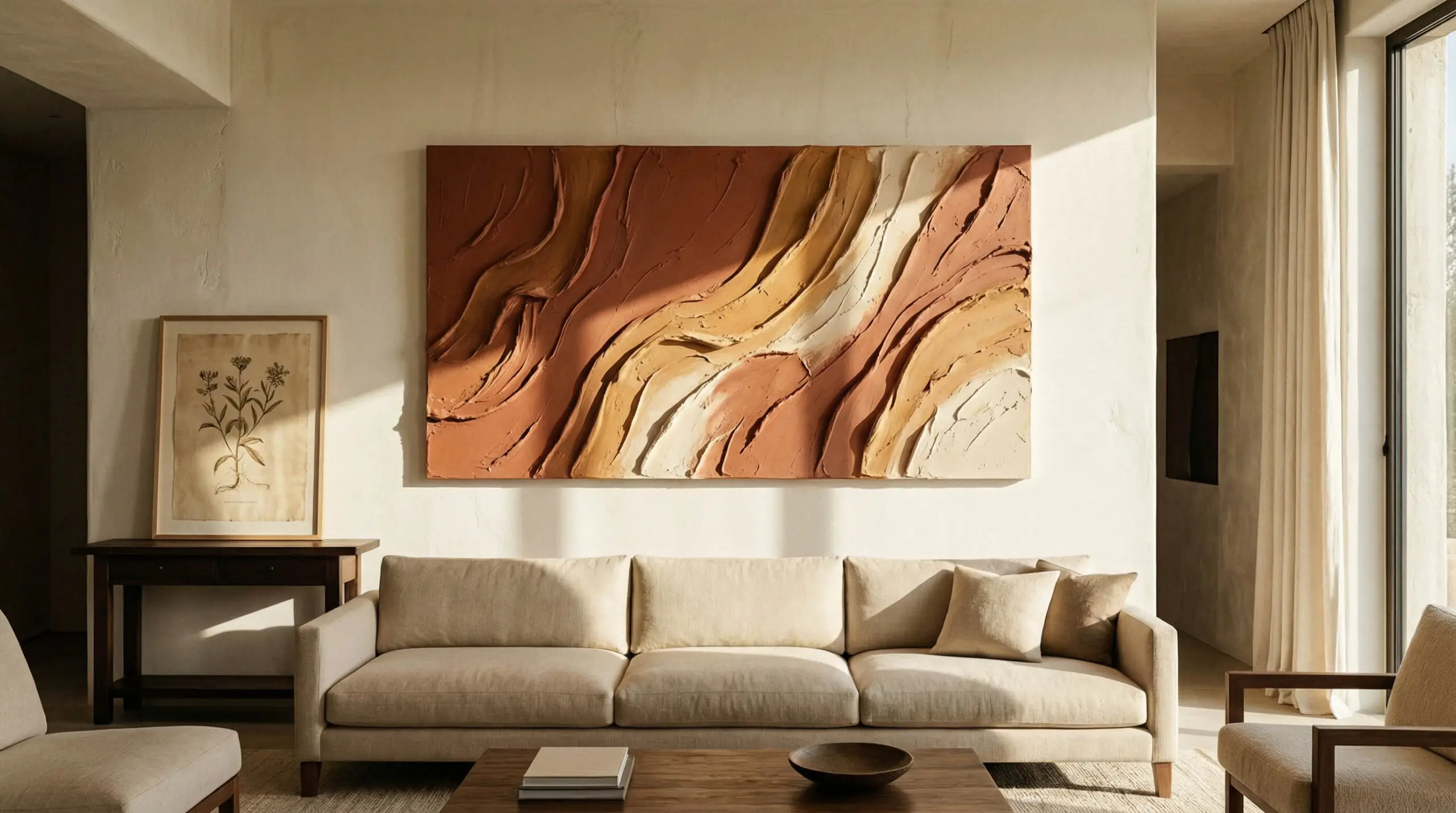
This textured abstract piece exemplifies how 2026 art trends invite physical interaction, blending organic materials for a grounded feel.
2. Oversized Statements: Going Big for Impact
Oversized wall art continues to dominate in 2026, but with a softer, more intentional approach. No longer just about filling space, these large-scale pieces serve as room anchors, often spanning entire walls to create immersive experiences. From photorealistic murals to abstract compositions, the focus is on scale that evokes emotion—calm in a bedroom or energy in a living area. This trend favors custom or modular designs that can be adapted, making it accessible for renters via removable panels.
Designers recommend selecting pieces that reflect personal narratives, like nature-inspired scenes for serenity or bold geometrics for dynamism. Sustainability plays a role here too, with many opting for fabric-based prints that are lightweight and eco-friendly. For ideas, explore BIG Wall Decor's customizable options, which allow uploading your own designs for truly unique oversized art. Avoid clutter by letting one piece shine, balanced with minimal furniture.
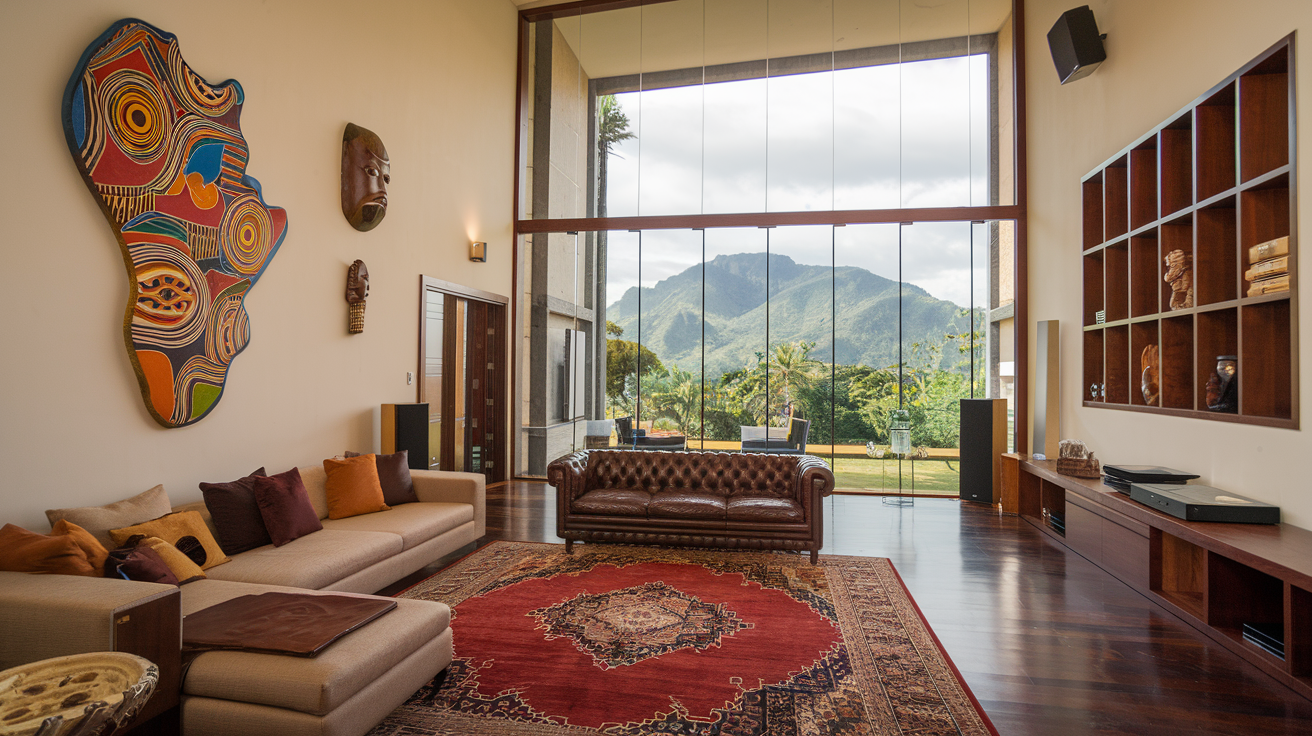
An expansive canvas like this demonstrates the power of scale in modern interiors, drawing the eye and defining the space.
3. Earth Tone Palettes: Grounded and Warm Hues
Earth tones are evolving in 2026, moving from muted beiges to richer, saturated shades like terracotta, moss green, and ochre. This palette grounds spaces, fostering a sense of connection to nature amid urban living. Wall art in these hues often features layered abstracts or botanical motifs, blending seamlessly with organic materials like wood or stone accents. It's a response to the need for balance, offering warmth without overwhelming vibrancy.
Incorporate earth tones by color-drenching—matching art to walls for a cohesive cocoon effect—or contrasting with metallic frames for subtle pop. This trend pairs well with biophilic design, where art mimics natural forms. Browse PIPA Fine Art's earth-inspired collections for pieces that evoke soil and sky, emphasizing sustainability through digital prints on recycled paper.
This sun-drenched earth tone artwork captures the inviting, natural essence of 2026's palette trends.
4. Neo Art Deco: Modern Glamour with Geometric Flair
Neo Art Deco revives the glamour of the 1920s but with a contemporary twist—sleek lines, metallic accents, and bold motifs reimagined for today's aesthetics. In wall art, this translates to graphic prints with sculptural elements, often in jewel tones or pastels for a fresh feel. It's ideal for adding sophistication to minimalist spaces, blending vintage elegance with modern minimalism.
To style, mix Neo Deco pieces with plush textiles for contrast. This trend appeals to those seeking personality without chaos. Discover vibrant examples at iCanvas's Neo Art Deco collection, featuring artists who infuse geometry with emotional depth.
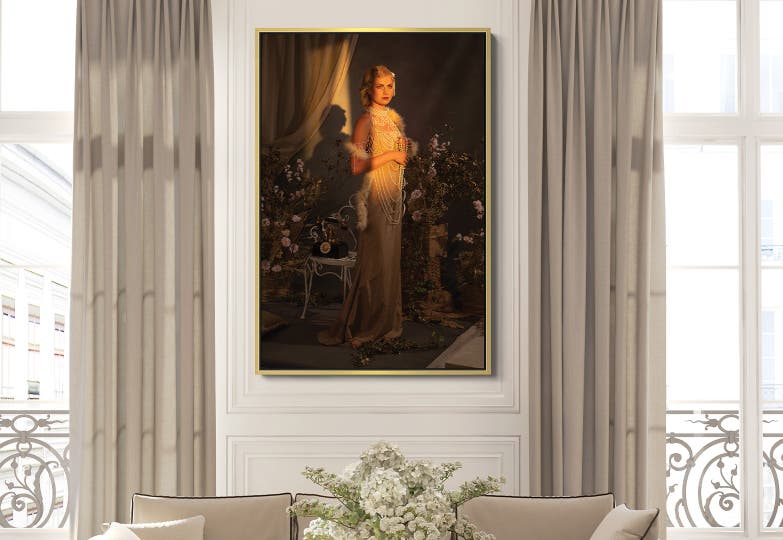
A Neo Art Deco print like this brings confident glamour and expressive form to any wall.
5. Abstract Nature: Softened and Ethereal Interpretations
Nature-inspired art in 2026 is becoming more abstract, with dreamy, ethereal depictions of forests, skies, or florals in soft pastels and flowing forms. This softening of minimalism reflects a yearning for escapism, using moody palettes to create magical yet realistic scenes. It's perfect for fostering tranquility in high-stress environments.
Layer these pieces with real plants for a biophilic boost. Artists are experimenting with AI-assisted designs for unique twists. For inspiration, visit Artfully Walls' Mediterranean and nature collections, where independent creators offer uplifting, climate-aware works.
This nature-inspired set highlights the abstract, serene vibe dominating 2026 trends.
6. Crafted Collage and Layered Expressions
Crafted collages are surging, featuring overlapping imagery, textures, and imperfections for a handcrafted vibe. This trend celebrates the creative process, from abstract to narrative forms, adding depth and personality. It's a nod to maximalism but with intention, avoiding clutter.
Use collages in gallery walls for dynamic storytelling. Sustainable materials like recycled paper enhance appeal. Explore iCanvas's crafted collage selections for pieces that feel alive and expressive.
7. Primary Colors with Classical Twists
Bold primaries—ultramarine, red, yellow—are back, but deepened with sculptural shapes and black accents for refinement. This trend injects energy while maintaining elegance, suitable for lively spaces.
Pair with neutrals to balance. Find sophisticated options at PrintKK's wall art ideas.
8. Maximalist Layering: Intentional Abundance
Maximalism in 2026 is about curated layers—mixing patterns, scales, and mediums for lived-in charm. Wall art plays a central role, with salon-style arrangements creating emotional narratives.
Focus on authenticity; use tools like BIG Wall Decor's AI Pattern Maker for personalized designs.
In conclusion, 2026 wall art trends invite us to create spaces that resonate on multiple levels—visually, tactilely, and emotionally. By embracing these styles, your home becomes a canvas for self-expression, blending innovation with timeless appeal.
FAQ
What are the top wall art colors for 2026? Earth tones like terracotta and moss green dominate, alongside softened primaries and ethereal pastels for balance and warmth.
How can I incorporate tactile art without overwhelming my space? Start small with one textured piece as a focal point, using neutral walls and lighting to emphasize depth.
Is oversized art suitable for small rooms? Yes, but choose vertical orientations or mirrors to enhance perceived space while adding impact.
What makes 2026 trends sustainable? Many feature recycled materials, low-impact inks, and customizable prints to reduce waste.
Can AI influence wall art trends? Absolutely—tools for generating patterns or hybrid designs are emerging, blending human creativity with tech.
What's the best way to start a gallery wall in 2026 style? Mix textures and scales around a theme, like nature abstracts, for cohesive yet expressive layering.