
Palette Knife Painting: Unlocking Bold Textures and Expressive Creativity
Palette knife painting is a dynamic and tactile approach to art that transforms the canvas into a three-dimensional landscape of color and form. Unlike traditional brushwork, which often blends seamlessly, palette knife techniques emphasize bold strokes, impasto layers, and optical mixing, where colors interact visually without physical blending. This method, popularized in the 19th and 20th centuries, allows artists to sculpt paint directly on the surface, creating works that catch light and shadow in unique ways. Whether you're a beginner exploring expressive freedom or a seasoned painter seeking to add texture to your repertoire, palette knife painting offers endless possibilities for innovation and personal expression.
The allure of palette knife painting lies in its ability to convey energy and movement. By applying thick dollops of paint with a flexible metal blade, artists can build up ridges and peaks that give the artwork a sculptural quality. This technique is particularly effective for capturing the essence of subjects like turbulent seascapes, vibrant florals, or abstract compositions. The physical act of spreading, scraping, and carving paint encourages a more intuitive process, freeing creators from the precision of brushes and inviting spontaneity. In an era where digital art dominates, the hands-on nature of palette knife work provides a refreshing return to materiality, making it a favorite among contemporary artists who blend traditional methods with modern themes.
Historically, palette knife painting emerged as artists sought ways to break from academic realism. In the 19th century, Impressionists like Claude Monet and Pierre-Auguste Renoir experimented with knives to quickly capture light and atmosphere, applying paint in broad, unblended strokes. This evolved in the 20th century with Abstract Expressionists such as Willem de Kooning, who used knives for aggressive, gestural marks that embodied emotional intensity. Today, the technique spans genres, from realistic landscapes to pure abstraction, influenced by pioneers who viewed the knife as an extension of the hand. Exhibitions and workshops, like those inspired by Jerry's Artarama's live sessions, continue to demystify these methods, encouraging new generations to explore the knife's potential.
Choosing the right tools is crucial for successful palette knife painting. Palette knives come in various shapes and sizes, each suited to specific effects. Diamond or trowel-shaped knives are ideal for spreading large areas of color, while pointed tips excel at fine details and carving. Long-bladed knives create sweeping strokes for backgrounds, and offset handles keep your fingers clean from wet paint. Materials matter too—flexible stainless steel blades offer smooth application, whereas stiffer ones provide sharp edges. Brands like Creative Mark offer sets that include a range of styles, ensuring versatility. For paints, heavy-body acrylics or oils are preferred, as their thick consistency holds form without slumping. Avoid thin, watery mediums; instead, use gel extenders to maintain body while adding transparency.
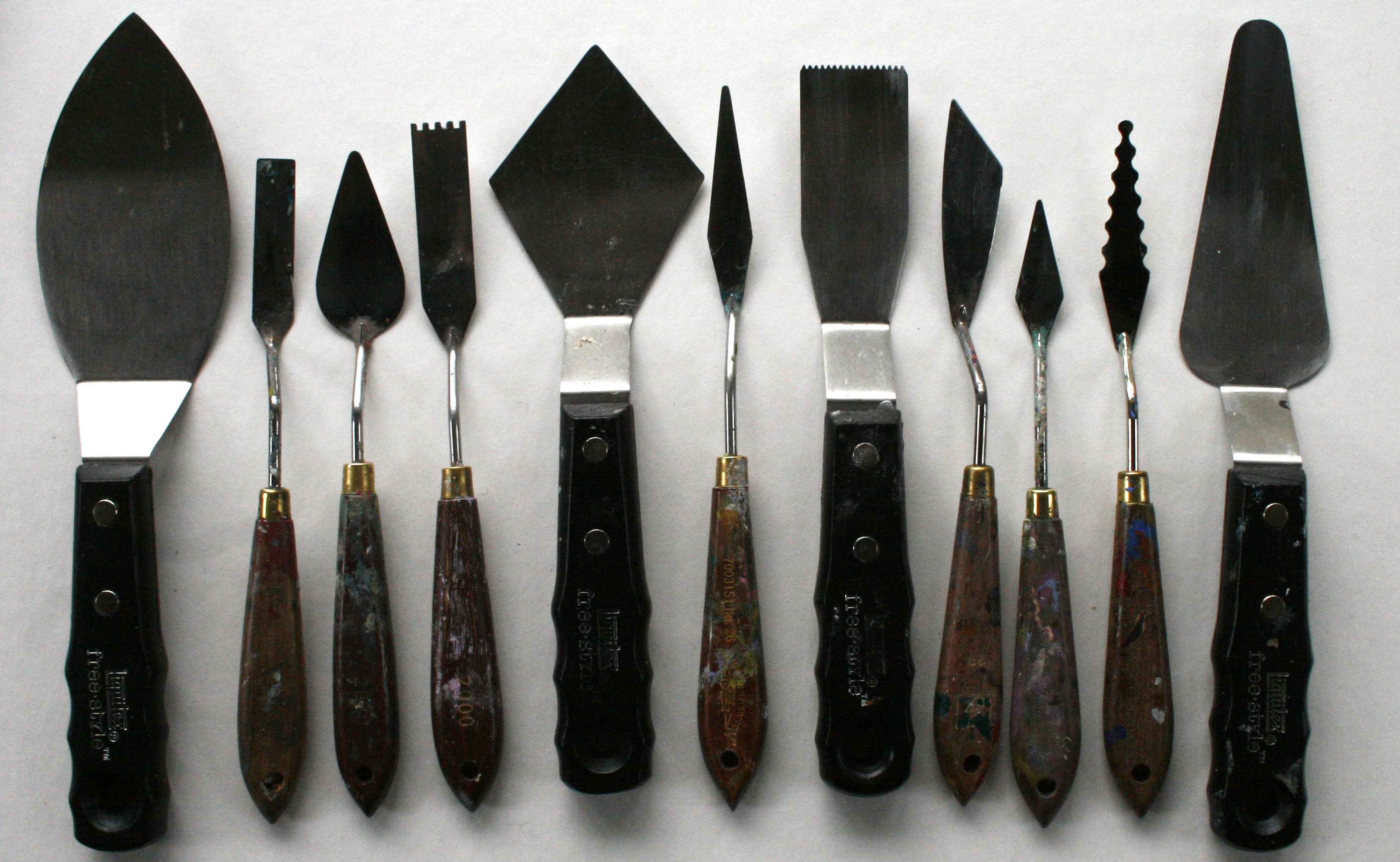
Surfaces play a key role in the outcome. Stretched canvas provides a slight bounce that enhances organic textures, making it great for expressive works. Rigid panels, like wood or MDF, offer stability for precise control and sharper edges. Linen canvases create a beautiful drag, revealing underlying layers for broken color effects. For studies or quick sketches, heavy paper works well, though it limits thick impasto buildup. Priming with gesso ensures adhesion, and experimenting with textured grounds can amplify the knife's effects. Ultimately, the interplay between tool, paint, and surface defines the artwork's character, turning simple applications into complex visual experiences.
Basic techniques form the foundation of palette knife painting. Start with the load-and-lay method: scoop unmixed paint onto the knife and apply it in one decisive stroke to preserve color purity. This creates vibrant transitions, perfect for landscapes where blues and greens merge optically. For impasto peaks, press firmly and lift cleanly, building ridges that catch light and add dimension. Smearing involves dragging the knife lightly over the surface, allowing previous layers to peek through for a vibrating, broken color effect—ideal for abstract pieces. Edge carving uses the knife's side like a chisel to define shapes or add highlights, while scraping back subtracts paint to reveal underlayers, adding depth and history to the composition.
Advancing beyond basics, artists can explore unique tricks for enhanced expression. Vary pressure and angle: light touches create soft blends, while firm presses yield bold textures. Directional strokes add movement—horizontal for calm horizons, diagonal for dynamic energy. Layering wet-on-wet allows subtle mixing on the canvas, but wet-on-dry builds pronounced relief. For special effects, incorporate unconventional tools like serrated edges for grass-like textures or rubber tips for smoothing. Mixing media, such as embedding sand or fibers into the paint, amplifies tactility. These methods, drawn from live demonstrations, encourage experimentation, turning potential mistakes into innovative features.
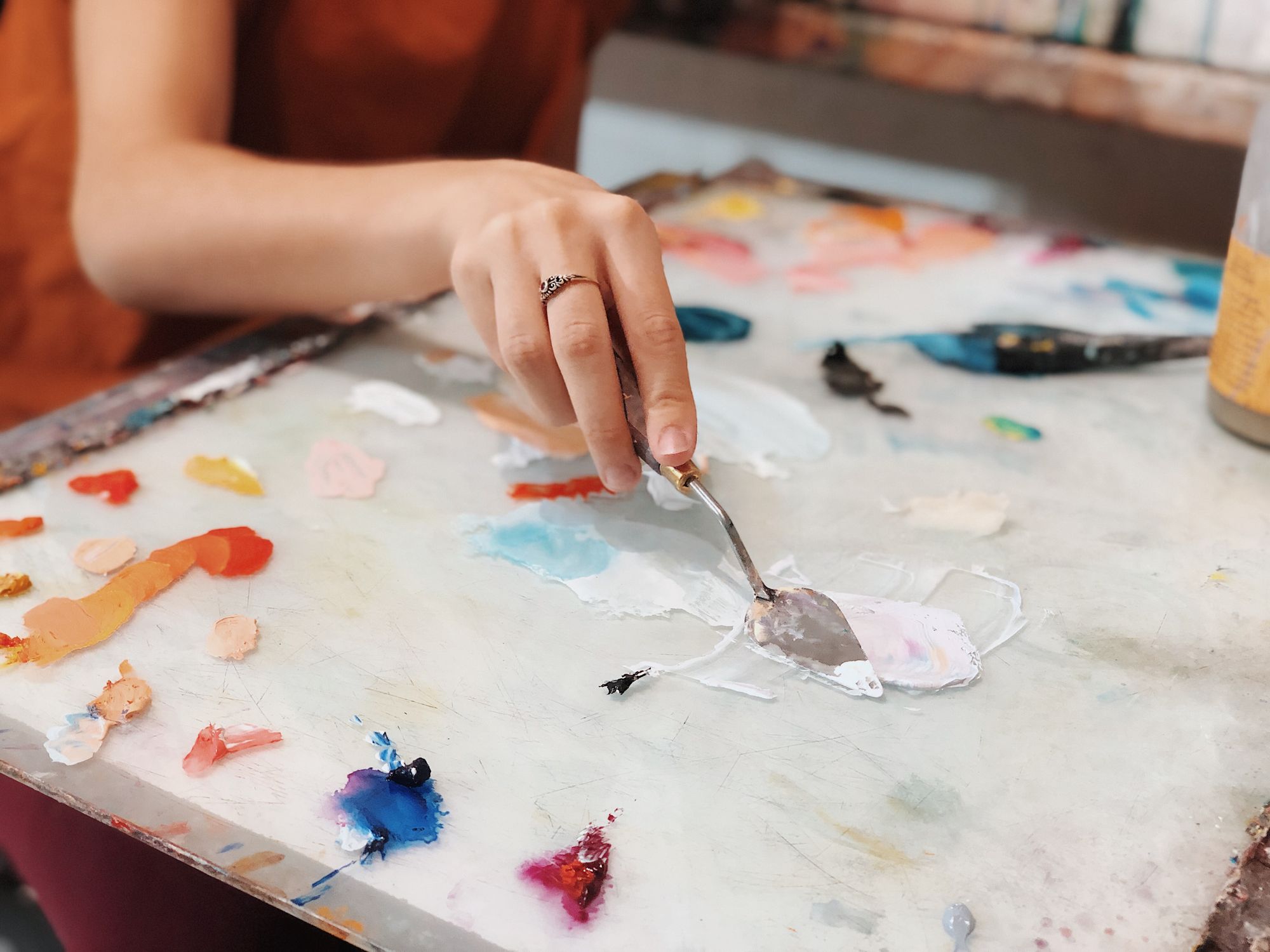
Tips for mastery include maintaining clean tools—wipe knives immediately to prevent color contamination. Work from dark to light, building up highlights last to avoid muddiness. Step back frequently to assess balance, as the knife's bold marks can overwhelm if overworked. For beginners, practice on small panels to build confidence without wasting materials. Use a limited palette to focus on value and shape rather than hue variety. In oils, allow drying time between layers; with acrylics, work quickly before skinning. These practical insights help overcome common hurdles, fostering a workflow that's both efficient and enjoyable.
Common mistakes in palette knife painting often stem from treating the knife like a brush. Overworking passages leads to flat, muddy results—resist the urge to blend excessively; let optical mixing do the work. Using thin paint causes slumping; always opt for heavy-body formulas. Drawing details instead of blocking shapes misses the technique's strength in simplification. To avoid these, approach with intention: plan compositions loosely, then commit to strokes. If errors occur, scrape back and rebuild. Patience is key; the knife rewards decisiveness, turning perceived flaws into textured narratives that enrich the final piece.
Palette knife painting shines in various genres. In landscapes, broad strokes capture shifting light on mountains or waves, as seen in impasto-heavy scenes where ridges mimic natural contours. Florals benefit from organic forms, with knives sculpting petals in vibrant, unblended colors. Abstracts thrive on pure expression, where random applications create emotional depth. Even portraits can incorporate knives for accents, adding grit to skin tones or hair. Seascapes and architectural subjects leverage the tool's precision for planes and reflections. This versatility makes it adaptable to personal styles, from realistic to non-representational.
Famous artists have elevated palette knife painting to iconic status. Vincent van Gogh's swirling skies in Starry Night showcase thick, directional impasto that conveys turmoil. Jackson Pollock adapted knives for his drip techniques, influencing action painting. Contemporary figures like Richard Schmid use knives for luminous realism, layering colors to build form. Leonid Afremov popularized vibrant, knife-only cityscapes, blending colors on canvas for dreamlike effects. These examples inspire, showing how the technique transcends eras, from Post-Impressionism to modern digital hybrids.
In modern trends, palette knife painting intersects with technology and sustainability. Digital simulations in apps like Procreate mimic knife effects, allowing virtual practice. Eco-friendly paints reduce solvents, appealing to green artists. Mixed media integrations, such as with resin or collage, push boundaries. In home decor, large-scale palette knife paintings add texture to interiors, serving as focal points in minimalist spaces. Collectors value the tactile quality, with online galleries offering affordable originals. Workshops and online tutorials democratize access, fostering communities around this expressive art form.
The psychological benefits of palette knife painting are profound. The physical engagement reduces stress, promoting mindfulness through rhythmic strokes. For therapy, it aids expression without words, helping process emotions via texture. In education, it teaches color theory and composition intuitively. As a hobby, it builds confidence, rewarding bold choices over perfection. This holistic appeal ensures its relevance, blending art with well-being in a fast-paced world.
Cleaning and maintenance extend tool longevity. For oils, use odorless solvents; acrylics clean with water before drying. Store knives flat to prevent bending. Regular care prevents buildup, ensuring smooth performance. Investing in quality sets pays off, as durable blades withstand rigorous use.
Palette knife painting's future looks vibrant, with innovations like 3D-printed custom knives and AI-assisted designs expanding horizons. As artists blend traditions with tech, the technique evolves, inviting endless creativity. Whether for personal fulfillment or professional pursuit, embracing the knife unlocks a world of bold, textured art.
In conclusion, palette knife painting is more than a method—it's a mindset of fearless application and visual discovery. From historical roots to contemporary applications, it offers tools for expression that brushes can't match. Dive in, experiment, and let the canvas come alive under your blade.
FAQ
What is palette knife painting?
Palette knife painting is an art technique using metal blades to apply and manipulate thick paint, creating textured, impasto effects without brushes.
What tools do I need for palette knife painting?
Essential tools include various shaped palette knives (diamond, pointed, long blade), heavy-body paints, and surfaces like canvas or panels.
What are basic techniques in palette knife painting?
Key methods include load-and-lay for pure color, smearing for broken effects, press-and-lift for impasto, and scraping for depth.
Who are famous artists using palette knives?
Notable figures include Vincent van Gogh for expressive impasto, Jackson Pollock for action marks, and Leonid Afremov for vibrant scenes.
Where can I buy palette knife paintings?
Explore collections like Palette Knife Painting for textured, large-scale artworks.
How do I avoid common mistakes?
Use thick paint, commit to strokes without overworking, and focus on shapes over details for vibrant, clean results.
Is palette knife painting suitable for beginners?
Yes, it's beginner-friendly as it encourages bold decisions and reduces detail anxiety, with quick learning through practice.