
Exploring Palette Knife Painting: Techniques for Dynamic Textures and Artistic Freedom
Palette knife painting is an exhilarating art form that emphasizes texture, spontaneity, and bold expression over meticulous detail. By wielding a flexible metal blade to apply and manipulate thick layers of paint, artists can create works with a sculptural quality that brushes simply cannot replicate. This technique, rooted in Impressionism and evolving through modern abstraction, allows for optical color mixing where hues blend visually from a distance, producing vibrant and lively surfaces. Whether depicting dramatic landscapes, abstract emotions, or floral bursts, palette knife painting invites creators to embrace imperfection and intuition, making it accessible for beginners while offering depth for advanced practitioners. In a world of digital precision, this hands-on method reconnects us with the physicality of art, turning the canvas into a playground of ridges, peaks, and valleys.
The history of palette knife painting traces back to the 19th century, when artists began experimenting with tools beyond brushes to capture fleeting impressions of light and form. Pioneers like Claude Monet used knives to apply quick, unblended strokes in works such as his haystack series, prioritizing atmosphere over realism. This approach influenced Post-Impressionists like Vincent van Gogh, whose swirling impasto in The Starry Night added emotional turbulence through textured blues and yellows. In the 20th century, Abstract Expressionists like Willem de Kooning pushed boundaries, using knives for aggressive, gestural marks that conveyed raw energy. Contemporary artists, inspired by these legacies, continue to innovate, blending knives with mixed media for hybrid styles. Workshops and live demonstrations, such as those from art supply experts, highlight how this technique democratizes art, allowing anyone to achieve professional-looking textures with minimal tools.
Selecting the appropriate tools is essential for mastering palette knife painting. Knives vary in shape, size, and flexibility, each tailored to specific effects. Trowel or diamond-shaped blades are versatile for spreading broad areas, while pointed tips allow for intricate carving and details. Long, straight blades excel in sweeping horizontal strokes for horizons or skies, and rounded edges create soft, organic forms like clouds or petals. Offset handles prevent smudges by keeping hands away from wet paint. Materials like stainless steel provide durability and easy cleaning, with flexible blades offering smooth transitions and stiffer ones delivering crisp edges. Recommended sets, such as those from Creative Mark, include a mix for experimentation. Pair these with heavy-body acrylics or oils—their thick, buttery consistency holds shape, preventing slumping. Additives like gel mediums can enhance body without diluting color, ensuring your impasto stands proud.

The choice of surface impacts the final texture dramatically. Stretched canvases offer a subtle bounce that encourages organic, uneven applications, ideal for expressive works. Rigid panels, such as birch wood or MDF, provide a stable base for sharp, controlled marks without warping under heavy layers. Linen surfaces create a natural drag, breaking up strokes for vibrant, broken color effects. For practice, heavy-weight paper or canvas pads suffice, though they limit extreme impasto. Always prime with gesso for better adhesion, and consider textured grounds to amplify the knife's sculptural potential. This synergy between tool and surface transforms simple applications into multifaceted artworks that evolve with light and viewpoint.
Fundamental techniques in palette knife painting revolve around addition and subtraction, building and revealing layers for depth. The load-and-lay method involves scooping unmixed colors onto the blade and applying them in a single, decisive stroke to maintain purity—perfect for creating optical blends in landscapes where greens and blues merge from afar. For impasto effects, press firmly and lift the knife to form peaks and ridges that capture shadows and highlights. Smearing lightly drags paint across the surface, allowing underlayers to peek through for a shimmering, broken color vibration. Edge carving treats the knife like a chisel, defining shapes or adding crisp highlights. Subtractive scraping removes excess paint to uncover previous applications, adding history and complexity. These core methods encourage a bold workflow, where each stroke contributes to the overall energy.
Advancing to more sophisticated tricks unlocks the technique's full potential. Vary pressure and angle for diverse textures: light skimming creates feathery blends, while heavy pressing yields bold relief. Directional strokes infuse movement—vertical for falling rain, circular for swirling skies. Wet-on-wet layering allows subtle on-canvas mixing for fluid transitions, whereas wet-on-dry builds pronounced dimension. Incorporate unconventional elements, like serrated knife edges for grass-like scratches or rubber spatulas for smoothing. Mixing media, such as embedding collage elements or sprinkling sand into wet paint, adds tactile intrigue. These innovations, often showcased in live art sessions, foster creativity, turning the knife into a versatile instrument for personal style development.
Practical tips ensure smooth progress in palette knife painting. Always work with a limited palette to emphasize value and shape over color chaos. Clean knives promptly—wipe acrylics with a cloth or use solvent for oils—to avoid contamination. Start with larger knives for blocking in forms, then switch to smaller ones for accents. Step back often to evaluate balance, as the technique's boldness can lead to overdominance. For oils, allow drying between layers; acrylics demand speed to prevent skinning. Beginners should practice on small formats to build confidence without material waste. Advanced users can experiment with scale, creating oversized pieces that immerse viewers in texture. These strategies minimize frustration, promoting a joyful, exploratory process.
Avoiding common pitfalls is key to vibrant results. Treating the knife like a brush often results in overworked, muddy passages—commit to strokes and resist blending. Thin paints slump and lose form; stick to heavy-body formulas. Pre-mixing colors excessively dulls vibrancy; let optical mixing shine. Focusing on details too early ignores the technique's strength in simplification. If mistakes arise, embrace them: scrape back and rebuild, turning errors into intentional textures. Patience and decisiveness are allies, transforming potential flaws into dynamic elements that enhance the artwork's narrative.
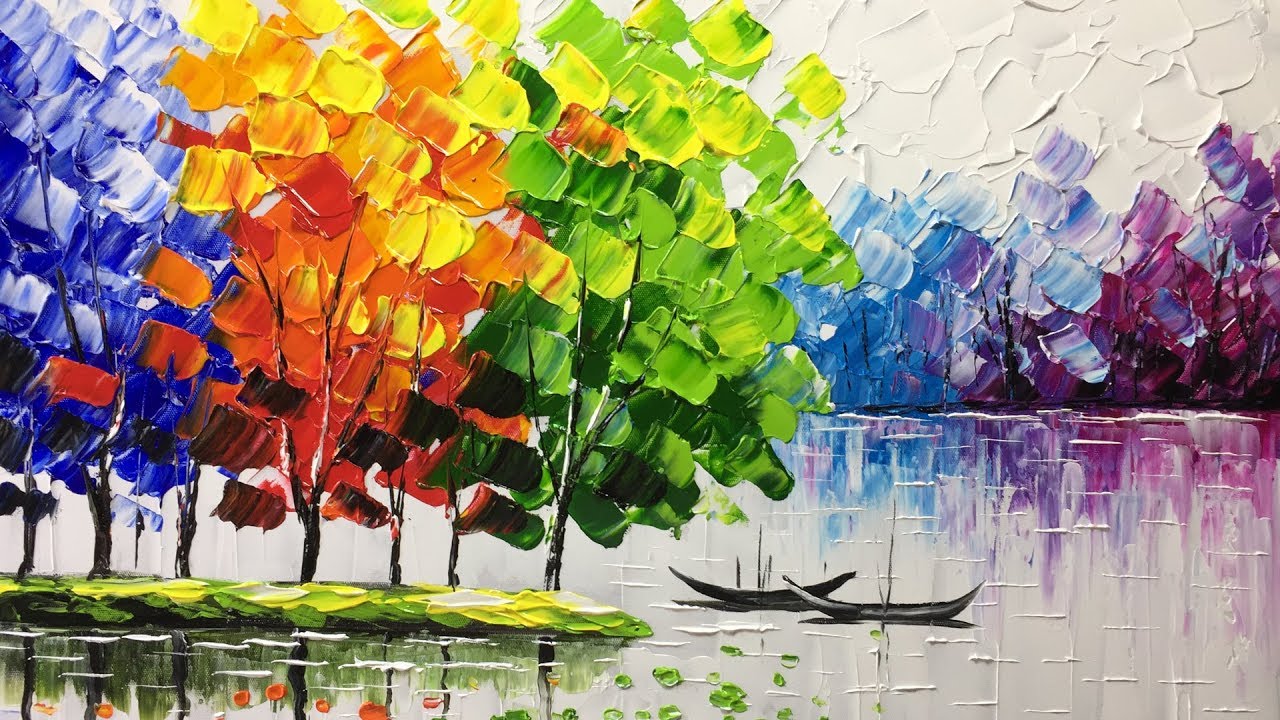
Palette knife painting adapts beautifully to diverse genres, offering unique applications in each. In landscapes, sweeping strokes capture atmospheric shifts, as in colorful autumn scenes where ridges mimic foliage contours. Florals come alive with massed forms rather than individual petals, building vibrant blooms through layered impasto. Abstracts benefit from pure gesture, where random marks evoke emotion through texture alone. Seascapes use carving for wave crests, while architectural subjects leverage planes for geometric precision. Even portraits incorporate knives for gritty accents, adding depth to features. This flexibility makes it ideal for hybrid styles, blending realism with abstraction for contemporary appeal.
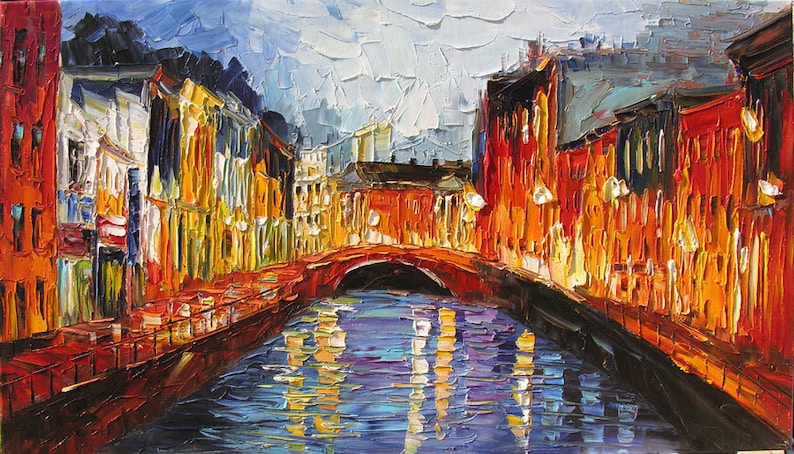
Iconic artists have harnessed palette knife painting to create masterpieces. Van Gogh's impasto-laden fields in Wheatfield with Crows convey anguish through turbulent textures. Jackson Pollock adapted knives in his action paintings, dripping and scraping for chaotic harmony. Leonid Afremov specializes in knife-only cityscapes, layering vibrant colors for dreamlike reflections. Richard Schmid employs knives for luminous realism, sculpting light in portraits. These exemplars demonstrate the technique's range, from emotional expression to refined detail, inspiring modern creators to push limits.
Current trends in palette knife painting integrate technology and eco-consciousness. Digital apps simulate knife effects for virtual prototyping, bridging traditional and tech-savvy artists. Sustainable paints, free from harmful solvents, appeal to environmentally aware creators. In decor, large palette knife paintings serve as statement pieces, adding tactile interest to interiors. Online marketplaces offer originals and prints, making textured art accessible. Communities thrive through social media challenges and virtual workshops, sharing tips on innovative hybrids like resin-over-knife textures.

The therapeutic aspects of palette knife painting enhance its allure. The rhythmic, physical motions reduce stress, promoting mindfulness. In art therapy, it facilitates non-verbal expression, helping individuals process feelings through texture. Educational programs use it to teach color theory intuitively, building student confidence. As a leisure activity, it fosters self-discovery, rewarding bold experimentation over perfection.
Maintenance routines preserve tools for longevity. Clean blades after each use to prevent buildup; store flat to avoid warping. Quality investments, like professional sets, endure rigorous sessions, ensuring consistent performance.
The future of palette knife painting gleams with potential, from AI-generated designs to custom 3D-printed blades. As artists fuse traditions with innovation, the technique will evolve, captivating new audiences. Embrace the knife's freedom, and watch your creativity soar.
FAQ
What defines palette knife painting?
It's a technique using metal blades to apply thick paint, creating textured impasto and optical blends, distinct from brushwork.
Essential tools for palette knife painting?
Include shaped knives (trowel, pointed, long), heavy-body paints, and surfaces like canvas or panels for optimal texture.
Basic techniques to start with?
Try load-and-lay for color purity, press-and-lift for peaks, smearing for vibration, and scraping for depth.
Famous artists known for this technique?
Vincent van Gogh for expressive impasto, Jackson Pollock for action marks, and Leonid Afremov for vibrant landscapes.
Where to purchase palette knife paintings?
Check collections such as Palette Knife Painting for textured originals.
How to fix common errors?
Use thick paint, avoid overworking, and focus on bold shapes; scrape and rebuild if needed.
Is it beginner-friendly?
Yes, it simplifies details and encourages intuition, making it easier for novices to create impactful art.