
Blue Abstract Art: Diving into the Infinite Depths of Color and Emotion
Blue abstract art stands as a mesmerizing testament to the power of color in evoking the intangible aspects of human experience. Rooted in the early 20th-century avant-garde movements, this genre eschews representational forms to delve into pure emotion, spirituality, and introspection through shades of blue. From serene ceruleans to profound indigos, blue abstract art invites viewers to immerse themselves in a world where boundaries dissolve, much like the vast ocean or endless sky. Inspired by exhibitions such as Contours of the World featuring Gabriele Münter at the Guggenheim Museum, this art form continues to captivate, blending historical innovation with contemporary relevance.
The genesis of blue abstract art can be linked to the Der Blaue Reiter group, founded in 1911 by artists like Münter and Wassily Kandinsky. Named after a blue rider symbolizing freedom and spirituality, the movement emphasized color's emotional resonance over literal depiction. Münter's works, often overshadowed by her male counterparts, brought a unique sensitivity to blue hues, using them to capture the "inner beauty of life" in semi-abstract landscapes. Her paintings, with bold outlines and layered blues, transition from impressionistic roots to full abstraction, as seen in her snowy scenes where blue evokes quiet solitude.
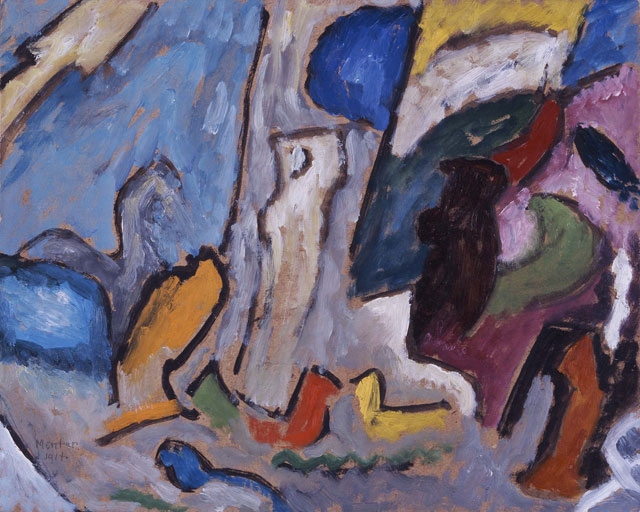
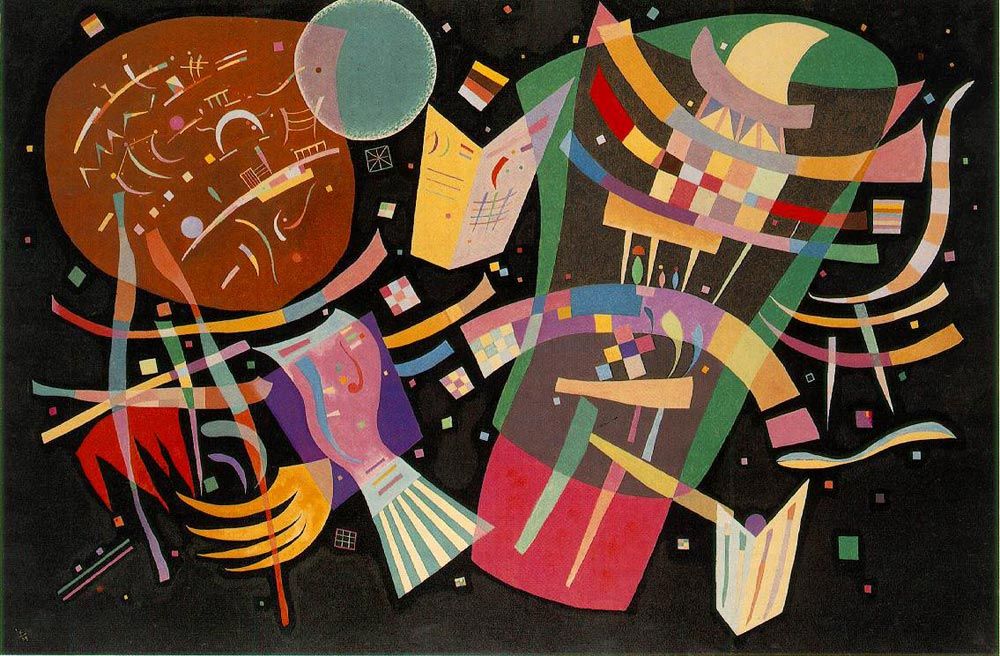
Kandinsky, a theoretical pioneer, viewed blue as a conduit to the spiritual realm. In his treatise Concerning the Spiritual in Art, he described blue as receding into depth, drawing the soul toward infinity. His Composition series exemplifies this, with swirling blues amid vibrant contrasts creating symphonic chaos. For instance, Composition VII uses dominant blues to orchestrate a visual music, where forms dissolve into emotional torrents. Münter's collaboration with Kandinsky enriched this approach; her feminine gaze added intimacy, as in her blue-tinted still lifes that hint at personal narratives beneath abstract veils.

By the mid-20th century, blue abstract art evolved into color field painting, led by Mark Rothko. Rothko's monumental canvases, like those in his chapel series, feature floating rectangles of deep blue, designed to envelop viewers in contemplative spaces. These works strip away complexity, allowing blue to pulse with existential weight—evoking both tranquility and profound sadness. Similarly, Yves Klein revolutionized the genre with his International Klein Blue (IKB), a patented ultramarine that he applied in monochromatic reliefs. Klein's IKB Monogold series treats blue as a void, symbolizing immateriality and the cosmos, challenging viewers to confront the infinite.
The post-war era introduced action painting, where blue became a tool for raw expression. Jackson Pollock's drip technique in Blue Poles layers turbulent blues with other colors, mirroring inner turmoil amid apparent chaos. This method, pouring paint onto horizontal canvases, creates rhythmic depths where blue anchors the frenzy, suggesting hidden order. Contemporary artists like Anish Kapoor extend this legacy with sculptural abstractions, using pigmented blues to create optical illusions of endless space, as in his void-like installations that absorb light and gaze.
Psychologically, blue abstract art leverages color's impact on the mind. Studies in color psychology indicate blue reduces stress and promotes focus, making it ideal for abstract works that foster meditation. In Rothko's fields, subtle gradients induce a sense of floating, aiding emotional release. For artists like Klein, blue represents the sublime, tapping into subconscious fears and wonders. This therapeutic quality extends to modern applications, where blue abstracts are used in art therapy to process anxiety, with swirling patterns mirroring mental states.

Techniques in blue abstract art span traditional and innovative methods. Early practitioners like Münter used oil paints with thick impasto for texture, blending cobalt and Prussian blues for depth. Kandinsky experimented with watercolor for fluidity, as in his early abstracts where blue washes create ethereal effects. Today, acrylics allow for quick layering, while digital tools enable infinite gradients in software like Adobe Photoshop. Aspiring creators can start with simple pours: mix turquoise and navy acrylics on canvas, tilt for organic flows, or use sponges for misty atmospheres. Advanced methods include encaustic wax for luminosity or mixed media with metallic accents to enhance blue's coolness.
In home decor, blue abstract art transforms spaces into havens of calm. Large-scale pieces from collections like Blue Abstract Painting offer textured options that complement minimalist interiors, cooling warm rooms or adding serenity to bedrooms. Imagine a Rothko-inspired blue field above a sofa, its gradients echoing twilight hues, or a Pollock-like drip in a study to inspire creativity. These artworks not only beautify but also influence mood, with blues proven to lower heart rates and enhance productivity in work environments.

Culturally, blue abstract art permeates media and society. Films such as Inception use blue motifs for dreamlike abstraction, while musicians like Björk incorporate blue visuals in album art to convey introspection. Environmentally, artists like Olafur Eliasson employ blue in installations to highlight melting glaciers, using abstract forms to urge climate action. In fashion, designers draw from Klein's IKB for collections that evoke mystery, blending art with everyday aesthetics.
Looking ahead, blue abstract art evolves with technology. Virtual reality allows immersive experiences in digital blue worlds, while AI generates novel patterns, expanding accessibility. Yet, the core remains timeless: as Münter's Guggenheim show reminds us, blue abstraction captures life's inner contours, inviting endless interpretation. In a fast-paced world, these works offer pause, depth, and connection to the profound.
FAQ
What defines blue abstract art?
Blue abstract art is non-representational, focusing on blue hues to express emotions and ideas without literal subjects, rooted in movements like Expressionism.
Key artists in blue abstract art?
Influential figures include Gabriele Münter, Wassily Kandinsky, Mark Rothko, Yves Klein, and Jackson Pollock, each innovating with blue for spiritual and emotional depth.
Psychological effects of blue in abstracts?
Blue promotes calm and introspection, often used to evoke serenity or melancholy, enhancing viewer engagement through immersive color fields.
Where to purchase blue abstract paintings?
Explore online collections such as Blue Abstract Painting for large, hand-painted options suitable for various spaces.
Tips for creating blue abstract art?
Use acrylics or watercolors in shades like cobalt and ultramarine; experiment with layers, drips, or digital tools for unique textures and gradients.
Suitability for interior design?
Yes, blue abstracts add tranquility to homes or offices, ideal for bedrooms or lounges, balancing aesthetics with emotional benefits.