
A Knockout Sale: Warhol’s Ali Portrait Sells for $18 Million at Art Basel Miami Beach
In a poetic twist of fate, a vibrant portrait of boxing legend Muhammad Ali by pop art icon Andy Warhol has fetched $18 million at Art Basel Miami Beach 2025, right in the very building where Ali's meteoric rise began. The sale, orchestrated by the prestigious Lévy Gorvy Dayan gallery, not only underscores the enduring market appeal of Warhol's celebrity portraits but also highlights the art world's knack for blending history, culture, and commerce. This transaction, occurring amid the bustling fair from December 4 to 8, 2025, at the Miami Beach Convention Center—formerly the Miami Beach Convention Hall—echoes the echoes of Ali's historic 1964 victory over Sonny Liston, a fight that crowned him the heavyweight champion and solidified his status as "The Greatest."
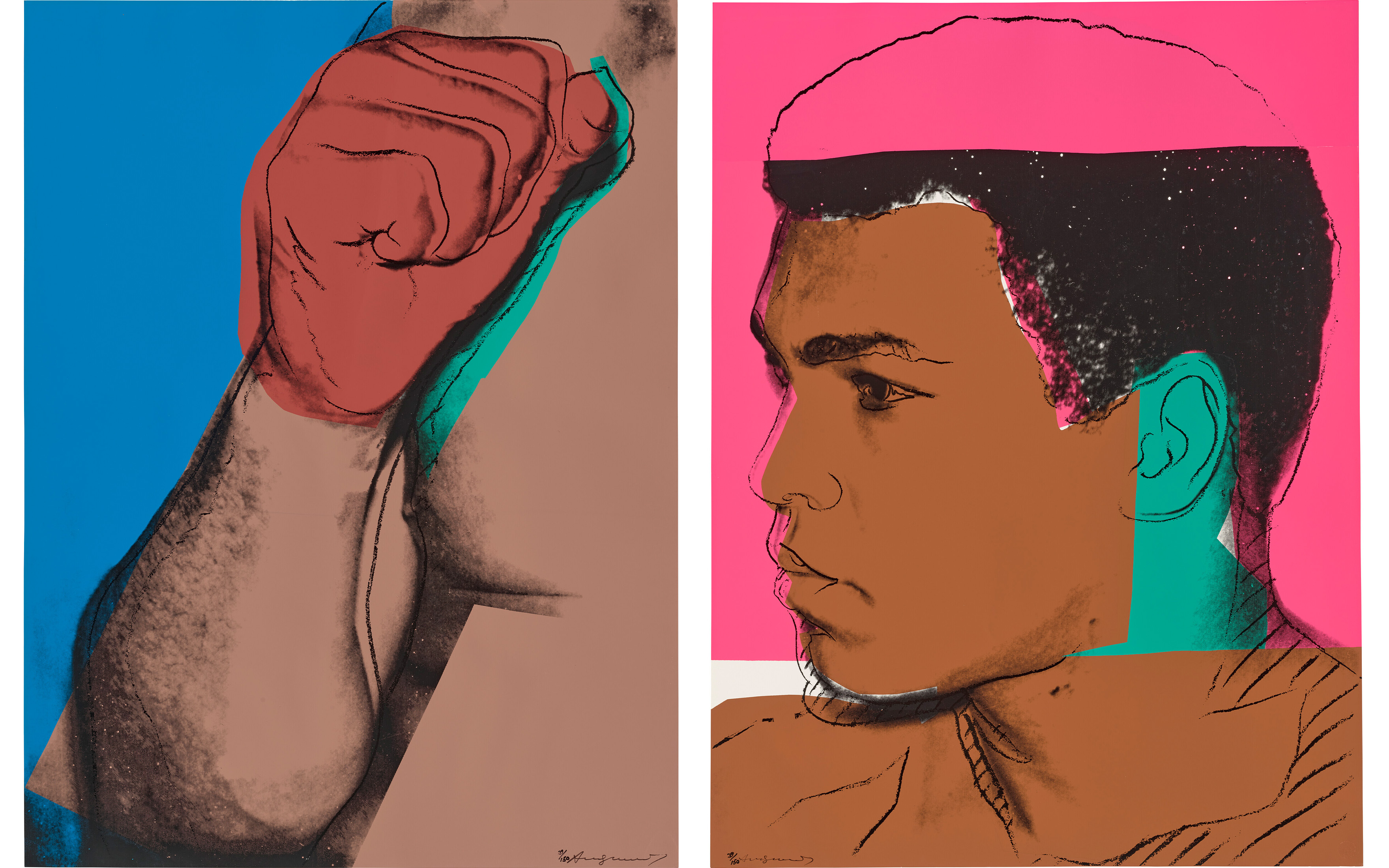
The painting in question, simply titled Muhammad Ali (1977), is a 40-by-40-inch silkscreen and acrylic on canvas, capturing the boxer in a dynamic pose with his gloved fists raised, his gaze piercing through Warhol's signature bold colors and repetitive motifs. Priced at $18 million including fees, the work was snapped up by an anonymous buyer on the fair's opening day, December 4, 2025. This price matches its previous auction record from 2021 at Christie's, where it also hammered at $18 million, indicating a stable yet premium valuation in a fluctuating art market. The gallery's strategic placement of the piece at their booth emphasized its historical resonance, drawing crowds eager to witness a slice of American cultural history.
Andy Warhol, the Pittsburgh-born artist who rose to fame in the 1960s with his silkscreen prints of consumer icons like Campbell's soup cans and Marilyn Monroe, turned his lens to athletes in the late 1970s. Commissioned by collector Richard Weisman, the "Athletes" series featured portraits of sports stars including Pelé, Jack Nicklaus, and O.J. Simpson. Ali's depiction stands out for its raw energy, blending Warhol's fascination with fame and consumerism with the boxer's larger-than-life persona. Signed on the reverse by Ali himself, the painting adds a layer of authenticity and personal touch, making it a coveted item for collectors. Weisman, a sports enthusiast and friend of Warhol, originally owned the series, which was intended to bridge the worlds of art and athletics.
The venue's significance cannot be overstated. The Miami Beach Convention Center, renovated multiple times since its 1957 opening, was the site of Ali's (then Cassius Clay) upset victory over Liston on February 25, 1964. That night, the 22-year-old underdog shocked the world by defeating the formidable champion in six rounds, declaring, "I am the greatest!" The fight, held in what was then the Convention Hall, marked the birth of Ali's legend—a brash, poetic fighter who would become a civil rights icon and global ambassador for peace. Selling Warhol's portrait here feels like a full-circle moment, as noted by gallery partner Brett Gorvy: "It's a knockout in the very ring where Ali claimed his throne."
This sale arrives at a pivotal time for the art market, which has shown signs of recovery after a post-pandemic slump. According to the UBS Global Art Market Report 2025, sales reached $68 billion in 2024, up 5% from the previous year, driven by blue-chip works like Warhol's. Pop art, in particular, remains a safe bet for investors, with Warhol's pieces consistently outperforming broader market indices. His Marilyn portraits, for instance, have seen averages exceeding $100 million at auction, as seen with Shot Sage Blue Marilyn (1964) selling for $195 million at Christie's in 2022. The Ali portrait's steady $18 million valuation reflects this resilience, appealing to buyers who value cultural icons amid economic uncertainty.
Art Basel Miami Beach itself played a starring role in the transaction. The fair, now in its 23rd edition, attracts over 80,000 visitors annually, featuring more than 280 galleries from around the globe. This year's event emphasized themes of identity and legacy, with booths showcasing works by artists like Kerry James Marshall and Cindy Sherman. Lévy Gorvy Dayan's presentation of the Warhol piece was part of a curated selection that included Pablo Picasso's Portrait de Paloma (1951) and other high-value lots, creating a narrative around 20th-century masters. The gallery's decision to price it transparently at $18 million—rather than opting for a private sale—invited public engagement, turning the booth into a mini-exhibition on fame and athleticism.
Muhammad Ali's enduring appeal fuels such high prices. Born Cassius Marcellus Clay Jr. in 1942 in Louisville, Kentucky, Ali transcended boxing to become a symbol of Black pride and anti-war activism. His refusal to be drafted into the Vietnam War in 1967, famously stating, "I ain't got no quarrel with them Viet Cong," cost him his title and three years of his prime but cemented his moral stature. Warhol, ever the chronicler of celebrity, captured this charisma in his 1977 series, photographing Ali at his Pennsylvania training camp. The resulting portraits, with their electric blues and reds, echo Ali's flamboyant style—think his rope-a-dope tactics and poetic trash-talk.
The intersection of art and sports has grown lucrative. Recent sales include Jean-Michel Basquiat's boxing-themed works fetching tens of millions, and contemporary artists like Kehinde Wiley portraying athletes in heroic poses. Ali's image, in particular, has been commodified across media—from films like Ali (2001) starring Will Smith to memorabilia auctions where his gloves sell for over $1 million. Warhol's portrait adds to this legacy, blending pop culture with fine art in a way that resonates with millennial and Gen Z collectors who value storytelling.
Critics, however, question the market's focus on celebrity-driven art. Some argue that Warhol's repetitive style risks oversaturation, with over 10,000 works in circulation potentially diluting value. Yet, pieces like the Ali portrait defy this, buoyed by provenance and cultural relevance. The 2021 Christie's sale, part of the Weisman collection dispersal, saw strong bidding from Asian and Middle Eastern buyers, signaling global interest. At Art Basel 2025, the piece's sale to an undisclosed collector—rumored to be a sports mogul—further internationalizes Warhol's market.
Beyond the headline price, the transaction spotlights Miami's evolution as an art hub. Once a sleepy beach town, the city now hosts one of the world's top fairs, injecting $500 million annually into the local economy. The Convention Center's history adds layers: Besides Ali's fight, it hosted the 1964 Beatles concert and political conventions. This confluence of past and present made the sale a media sensation, covered by outlets from The New York Times to ESPN.
Looking ahead, the Warhol-Ali sale could influence upcoming auctions. Sotheby's and Christie's spring sales in 2026 are expected to feature more sports-related art, capitalizing on events like the Olympics. For collectors, it reaffirms Warhol's blue-chip status—his works have averaged 15% annual returns over the past decade, per Artprice indices.
In essence, this knockout sale isn't just about dollars; it's a celebration of two legends whose paths converged in paint and punches. As Ali once said, "Float like a butterfly, sting like a bee"—words that could describe Warhol's swift, impactful strokes. In the halls where Ali rose, his image endures, proving art's power to immortalize greatness.

The broader implications ripple through the art ecosystem. Galleries like Lévy Gorvy Dayan, formed by mergers of powerhouses like Dominique Lévy and Amalia Dayan, specialize in such high-stakes deals, blending blue-chip modernism with contemporary flair. Their success with this piece follows recent triumphs, like selling a Picasso for $20 million earlier in 2025.
Ali's cultural footprint extends to philanthropy; proceeds from related sales often support the Muhammad Ali Center in Louisville, promoting his values of respect and confidence. Warhol, too, left a foundation aiding visual arts, ensuring their legacies inspire future generations.
As Art Basel wraps, this sale stands as a highlight, blending nostalgia with investment savvy. In a market where digital art and NFTs compete, traditional masterpieces like Warhol's Ali prove timeless.
Reflecting on the event, one can't ignore the irony: A building born for spectacles—from boxing bouts to art fairs—hosts a multimillion-dollar homage to a man who fought for equality. It's a reminder that art, like boxing, is about resilience and impact.
FAQ
What is the painting that sold for $18 million?
Andy Warhol's Muhammad Ali (1977), a 40-by-40-inch silkscreen and acrylic portrait from his "Athletes" series.
Where did the sale take place?
At Art Basel Miami Beach 2025, in the Miami Beach Convention Center—the same venue where Ali won his first heavyweight title in 1964.
Who sold the Warhol Ali portrait?
The Lévy Gorvy Dayan gallery offered the work, which was previously sold at Christie's in 2021 for the same price.
Why is this sale significant?
It highlights Warhol's market strength and the cultural intersection of art and sports, occurring in a historically resonant location.
What other Warhol works are comparable?
His Marilyn Monroe portraits, like Shot Sage Blue Marilyn, which sold for $195 million in 2022.